


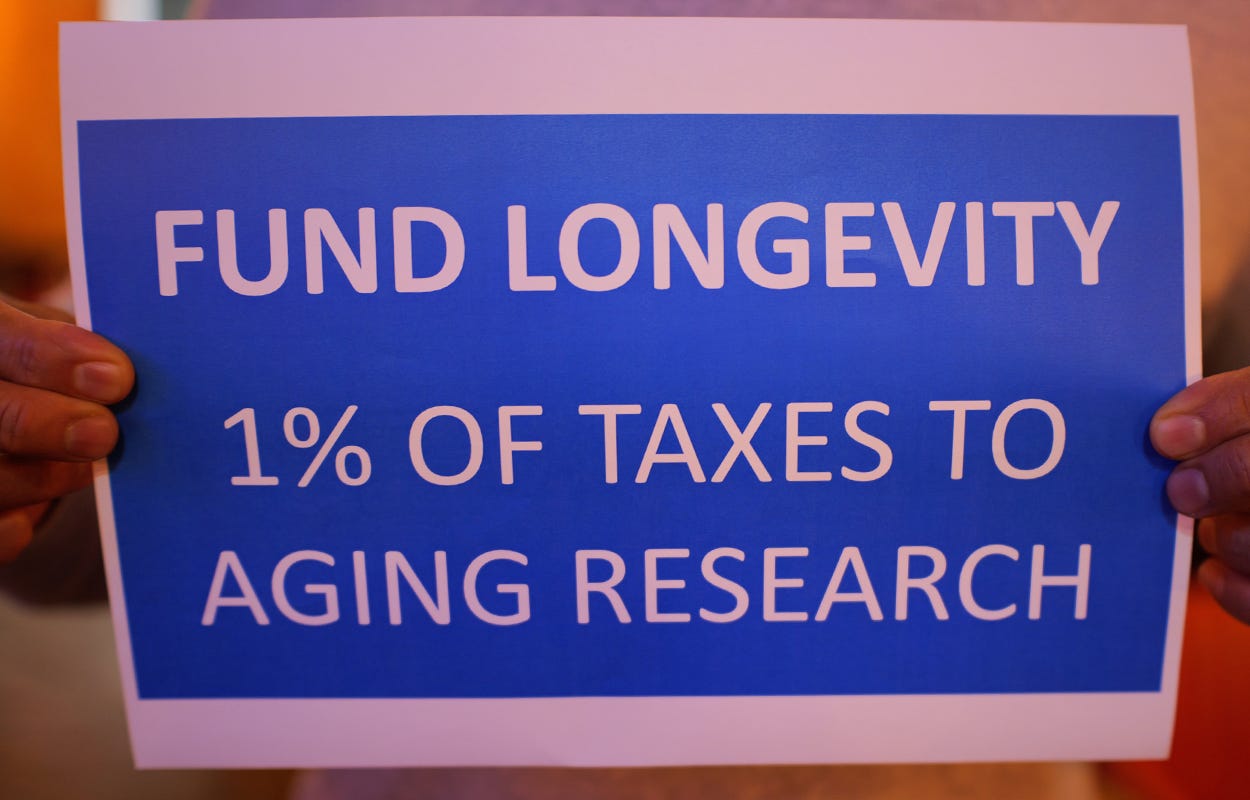
On the evening of April 8th, 2026, I walked into Ye Olde Cock Tavern—a pub in London whose history dates back before the 17th century and which Charles Dickens frequently visited—to join a gathering asking a very large question: should we dedicate 1% of taxes to curing ageing?
The same question was being asked simultaneously in other cities across the world, from Amsterdam and Berlin to Stockholm and Tel Aviv. Online events ran alongside the rallies, bringing together authors, activists, scientists, and entrepreneurs to discuss what can be done to accelerate the anti-ageing movement.
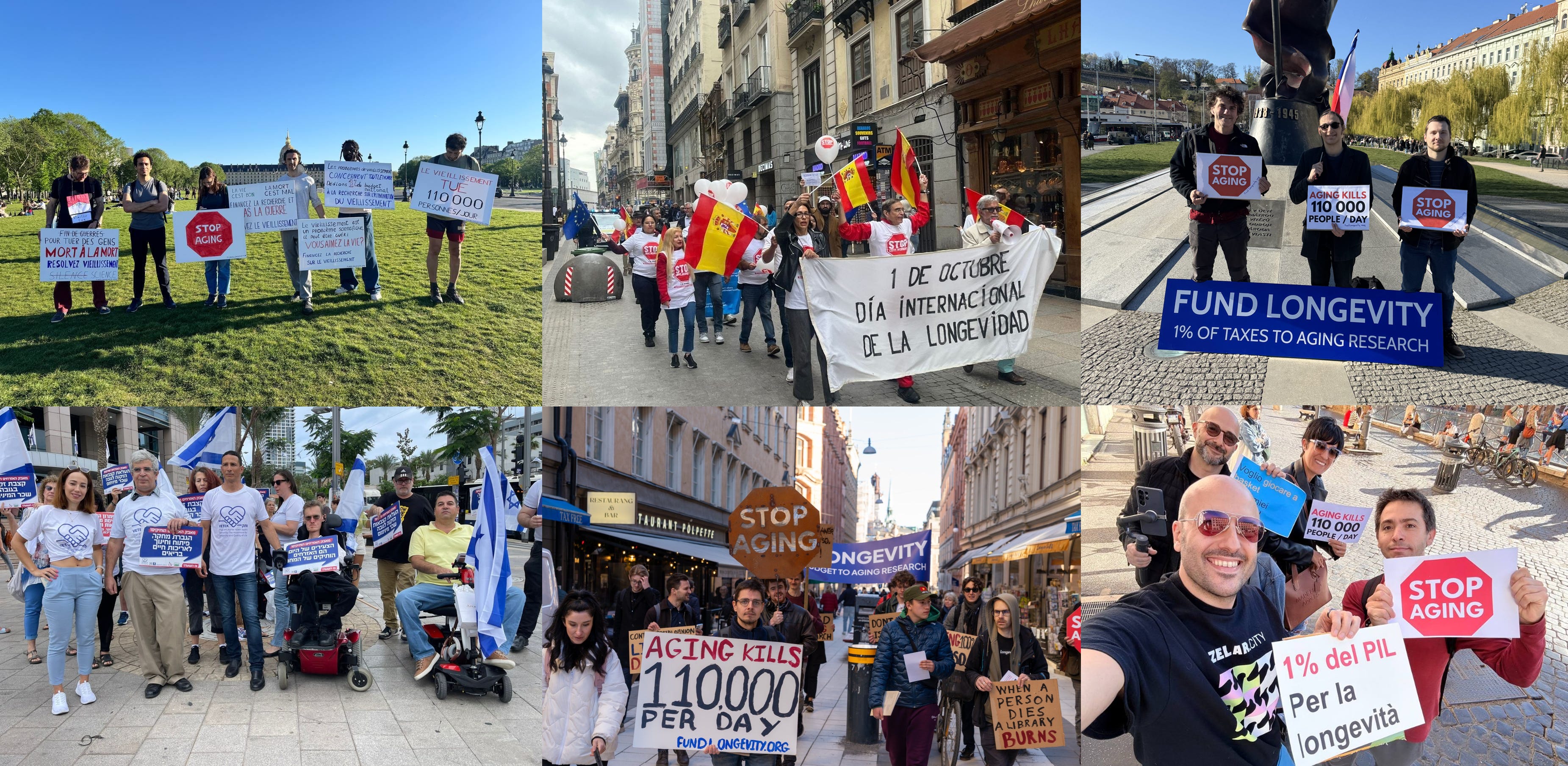
The rallies were organised by Fund Longevity, a non-profit initiative founded by Linus Petersson and Andrei Panferov in Stockholm and run by volunteers in each city. Ageing kills 110,000 people per day and is the primary risk factor behind cancer, heart disease, dementia, and most other major non-infectious diseases. Yet healthcare systems continue to treat these conditions one by one, without addressing their shared underlying cause. Private investors poured an estimated $1.7 billion into longevity science in 2025 alone, yet no government currently operates a dedicated programme aimed at treating the biological process of ageing. Fund Longevity wants that to change by pushing governments to fund ageing research and create regulatory pathways for treatments that target ageing itself.
Here is what it looked like in London.
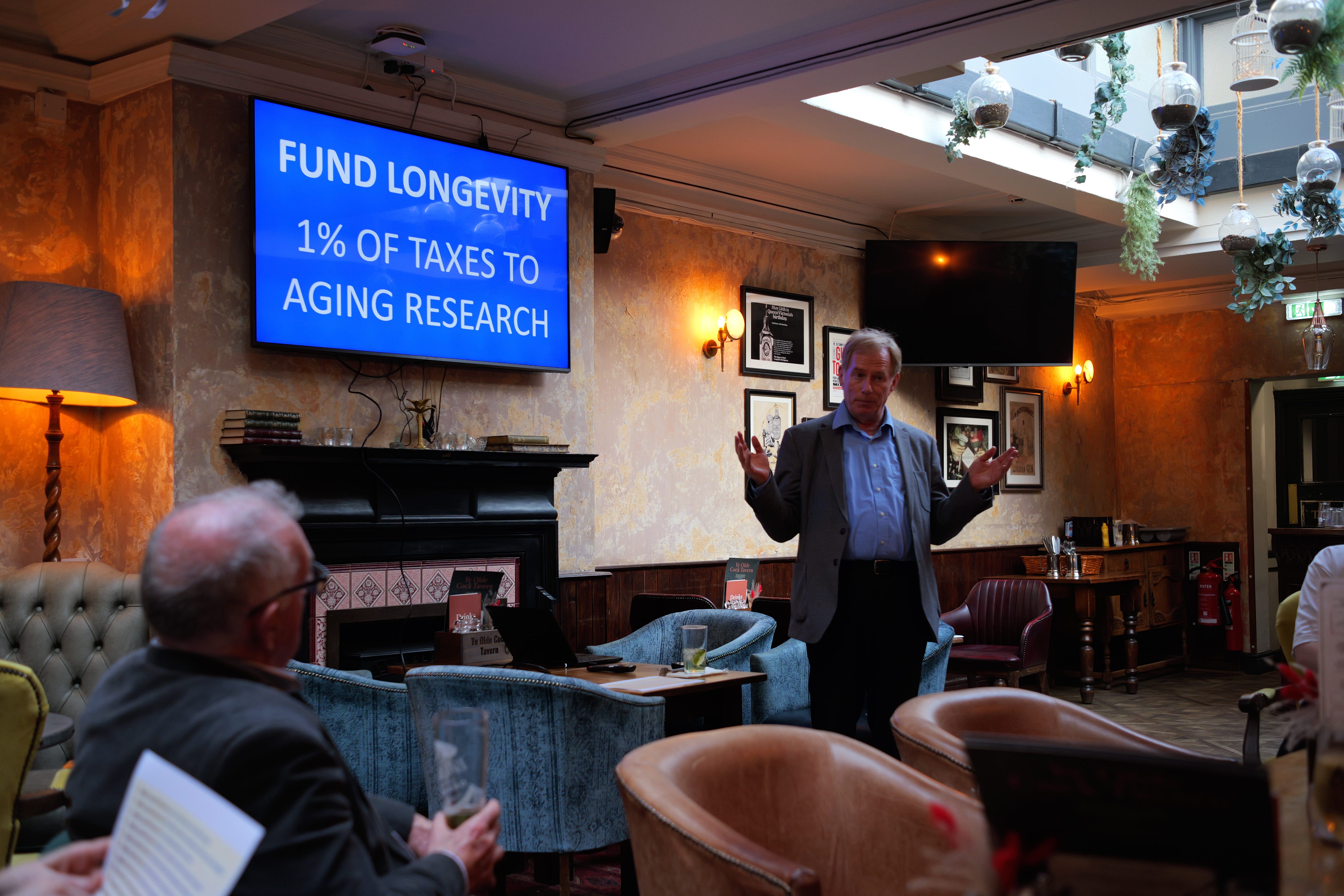
Around twenty people gathered at the Tavern that evening. David Wood, the chair of London Futurists, opened the discussion by putting the question that was being asked around the world that day—would you give 1% of taxes to ageing research?
The opinions were divided. Some saw it as a far better investment than defence spending. Others argued the private sector was better placed to finance it. A few were on the fence, and some opposed the idea outright.
David then made the case for why the answer should be yes. We see ageing today as a natural, unchangeable part of life. But people once thought the same about tuberculosis, and about slavery. We found a cure for one and abolished the other. We have changed things we believed were unchangeable before, so why not ageing? Studies show that the effects of ageing can be reversed in animals, and there is reason to believe the same principles could apply to humans. Just as we made tuberculosis a disease of the past, we could make ageing one too.
The floor opened up after that. The questions people raised cut to the heart of why this cause still makes many people uneasy. Who would benefit from longevity therapies? Would they be distributed fairly, or available only to the wealthy few? How would society change when people could live in good health to 100, 120, 150, or beyond? What would that mean for careers, pensions, and social mobility?
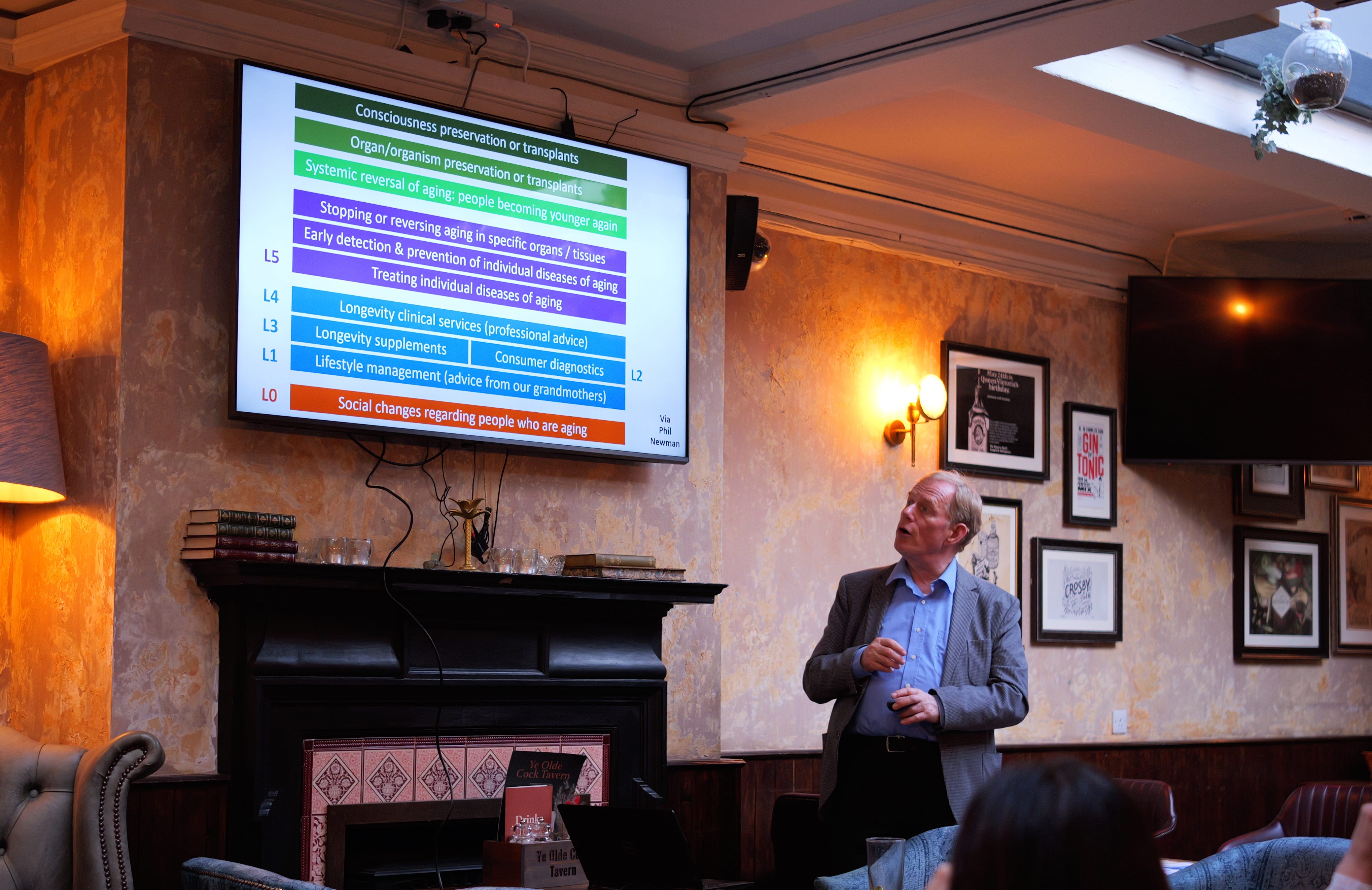
My contribution to the discussion was putting that 1% into concrete numbers. The UK government collected £858.6 billion in taxes last year, and the US federal government collected $2.48 trillion. One per cent would mean £8.6 billion and almost $25 billion respectively. Those are not small numbers. But consider what ageing already costs. The UK plans to spend £379 billion in 2026 on social protection, much of it driven by the fact that people get sick and frail as they age. Against that backdrop, even a fraction of what Fund Longevity proposes starts to look less like a radical demand and more like an investment. I don't expect any government to commit 1% anytime soon. But 0.1% could fund the kind of research that pays for itself many times over and improves the quality of life for millions of people.
Shortly after, the discussion wrapped up. I stayed for a while longer, talking with a few people over drinks, before leaving the pub with a head full of thoughts.
As I walked back home through London on that unusually warm April night, I reflected on how much the field of longevity has changed since I first learned about it fifteen years ago. Back then, the field was still largely academic, though it was beginning to attract serious attention from outside traditional gerontology circles. Experiments on model organisms had shown that reversing the effects of ageing was possible. I remember watching early YouTube videos of Aubrey de Grey advocating for treating ageing as an engineering problem, though those ideas remained controversial within mainstream gerontology. There was essentially no “longevity industry” as we would recognise it today. Calico, Google’s ageing venture, wouldn’t launch until 2013. Most biotech investors considered ageing too speculative and too poorly defined as a therapeutic target. Clinical trials were a distant dream, and the only human experiments were those done by daring individuals willing to experiment on themselves.
Now it is a different world. Longevity has entered the mainstream. Best-selling books, podcasts, and YouTube channels with millions of followers are introducing people to the science of extending healthspan. Private capital from people like Jeff Bezos and Sam Altman is flowing in at a scale that would have been unthinkable fifteen years ago. Longevity clinics have started opening around the world. I have met many young people, fresh out of university, who have dedicated their careers to solving the problem of ageing. Their optimism is infectious and rejuvenating.
And yet, some things have not changed. The FDA still largely does not recognise ageing as a treatable condition, even as real clinical trials are finally underway. The TAME trial, proposed a decade ago to test whether metformin can target ageing itself, has been stuck in funding limbo ever since. Estimated to cost between $45 and $70 million, it remains only partially funded despite being the single most high-profile attempt to get the FDA to recognise ageing as an indication. A decade of waiting for a trial that costs less than a single fighter jet.
The PEARL trial, which tested rapamycin in healthy older adults for a full year, had to be crowdfunded. Its results, published in 2025, showed the drug was safe and hinted at measurable health benefits. Life Biosciences has received FDA clearance for a Phase 1 trial of the first-ever cellular rejuvenation therapy using epigenetic reprogramming. The science is reaching the clinic, but it is doing so almost despite the system, not because of it.
Meanwhile, the private capital steps in where public funding is nowhere to be seen. Retro Biosciences, initially seeded with $180 million from Sam Altman, is now raising a $1 billion Series A to fund clinical trials for drugs targeting age-related diseases, including a potential Alzheimer’s treatment. The money is there. The political will is not.
The state of the anti-ageing movement reminds me of where artificial intelligence was before the transformer breakthrough. AI had decades of foundational research, growing but fragmented interest, and periodic waves of hype followed by disappointment. Until a single paper, “Attention Is All You Need,” changed the trajectory of the entire field and brought us to the AI revolution. Longevity science feels like it is approaching a similar inflection point. What the field needs now is its own transformer moment. It will most likely come from a successful clinical trial that proves, beyond doubt, that ageing can be slowed or reversed in humans.
Some of the most prominent voices in the field believe that moment may not be far away. Aubrey de Grey gives it a 50% chance by the late 2030s. Harvard professors George Church and David Sinclair place their predictions in the same window. Ray Kurzweil thinks we could reach what researchers call "longevity escape velocity"—the point where medical advances extend your remaining life expectancy by more than a year for every year that passes—by 2030. These are optimistic predictions, and the cautious scientific establishment would not endorse most of them. But even the cautious view acknowledges that the field is moving faster than at any point in its history.
If that breakthrough does come, we are not ready for it. The questions people raised at the pub that evening—about access, inequality, the shape of a society where people live to 150—are not hypothetical thought experiments. They are policy questions that will need answers.
That is why initiatives like Fund Longevity matter. Not just for raising awareness, but for making the idea feel real. The more people hear that curing ageing is not a far-fetched science fiction but a plausible near-term goal, the more they will be willing to support it and call on governments to take action.
At the end of the event, David asked those who were supporting the cause for a group photo. Out of twenty people who gathered in London that evening, only four were willing to step forward. Every movement begins with a handful of people willing to be seen before the rest of the world catches up.
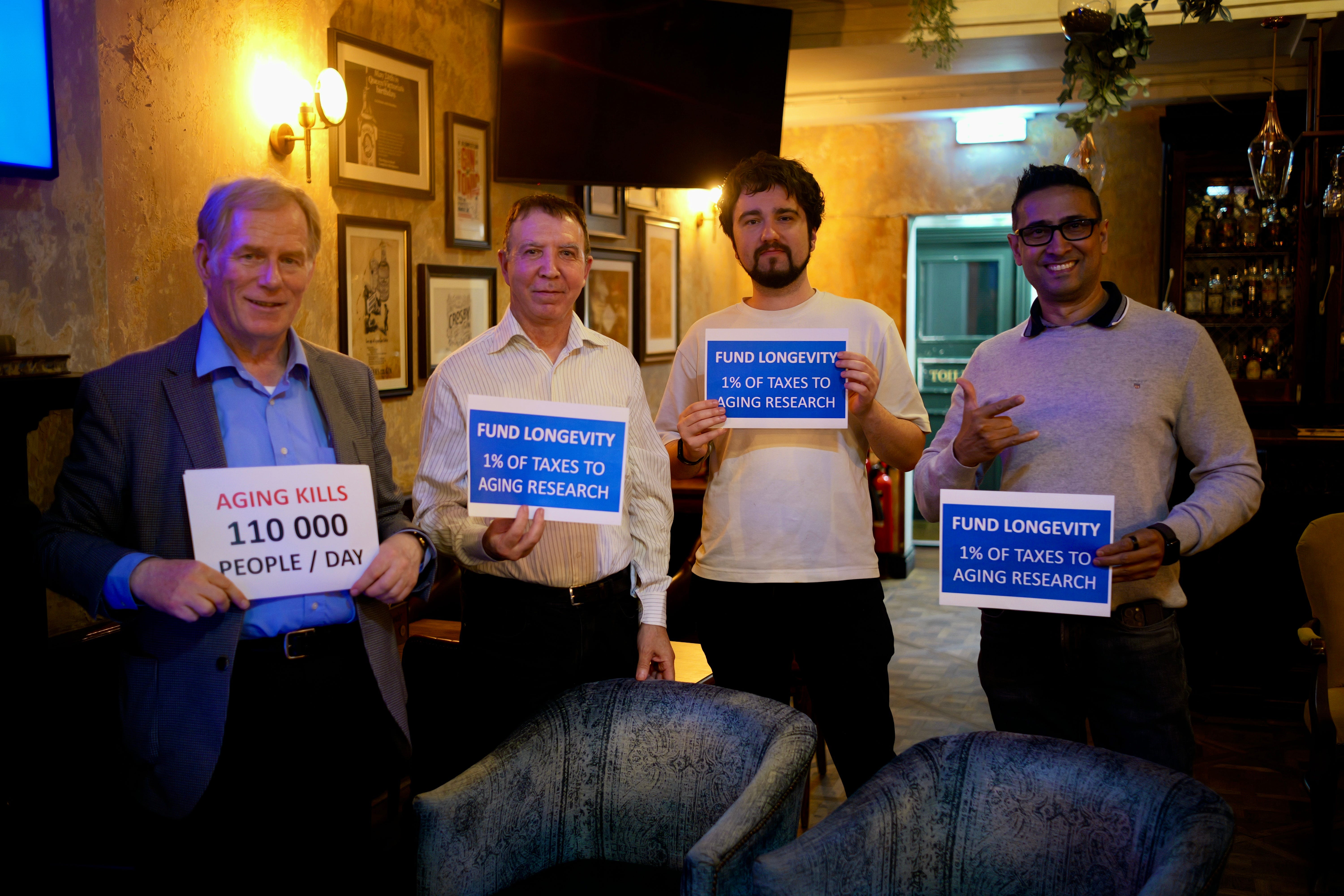
Now it's your turn. The same question that was asked around the world on April 8th: would you give 1% of taxes to ageing research?

Thanks for reading. If you enjoyed this post, please click the ❤️ button or share it.
Humanity Redefined sheds light on the bleeding edge of technology and how advancements in AI, robotics, and biotech can usher in abundance, expand humanity's horizons, and redefine what it means to be human.
A big thank you to my paid subscribers, to my Patrons: whmr, Florian, dux, Eric, Preppikoma and Andrew, and to everyone who supports my work on Ko-Fi. Thank you for the support!
My DMs are open to all subscribers. Feel free to drop me a message, share feedback, or just say "hi!"
The idea has no where near the requisite support to even discuss in these terms currently. Maybe after the ’transformer moment’.