



Every now and then, a project comes along that shows us where AI is heading before the industry is ready to take us there. OpenClaw is that project.
OpenClaw is the most exciting thing happening in AI right now. For the past few weeks, the AI community has been captivated by it, sharing one viral story after another on what is possible to build with it. It is equal parts impressive and terrifying, not safe enough for the general public, and foreshadows what is to come.
What is OpenClaw, and what can it do?
Marketing itself as “the AI that actually does things“, OpenClaw (formerly known as Clawdbot and Moltbot) is a free and open-source autonomous agent that everyone can download and install on their computers, connect to apps, and then ask it to do things. You can ask it to do something, and then it goes off and does it (even while you sleep). OpenClaw can use over 50 integrations, allowing it to send messages, read emails, use browsers, control smart home appliances, and more. It remembers previous conversations, and if it gets stuck, it tries to find a workaround rather than just stopping.
The underlying technology powering OpenClaw isn't revolutionary on its own. It is essentially a wrapper that connects an LLM (Claude, GPT, a local open model, etc.) to local tools and apps. What made it take off is that OpenClaw put these familiar pieces together in a way that, for many users, felt like having a genuine digital assistant rather than a glorified chatbot.
So, what can you do with OpenClaw, then? While walking with his dog, one developer noticed a deployment had failed. Via voice, he asked his OpenClaw to look into it. It reviewed the logs, found the root cause, updated the configs, redeployed, and confirmed everything worked—all before he got home. Others used it for meal planning for a family, or negotiating a car purchase and saving $4,200. Someone asked their OpenClaw to order groceries, and the AI agent independently navigated a login flow and intercepted a two-factor authentication code to complete the task.
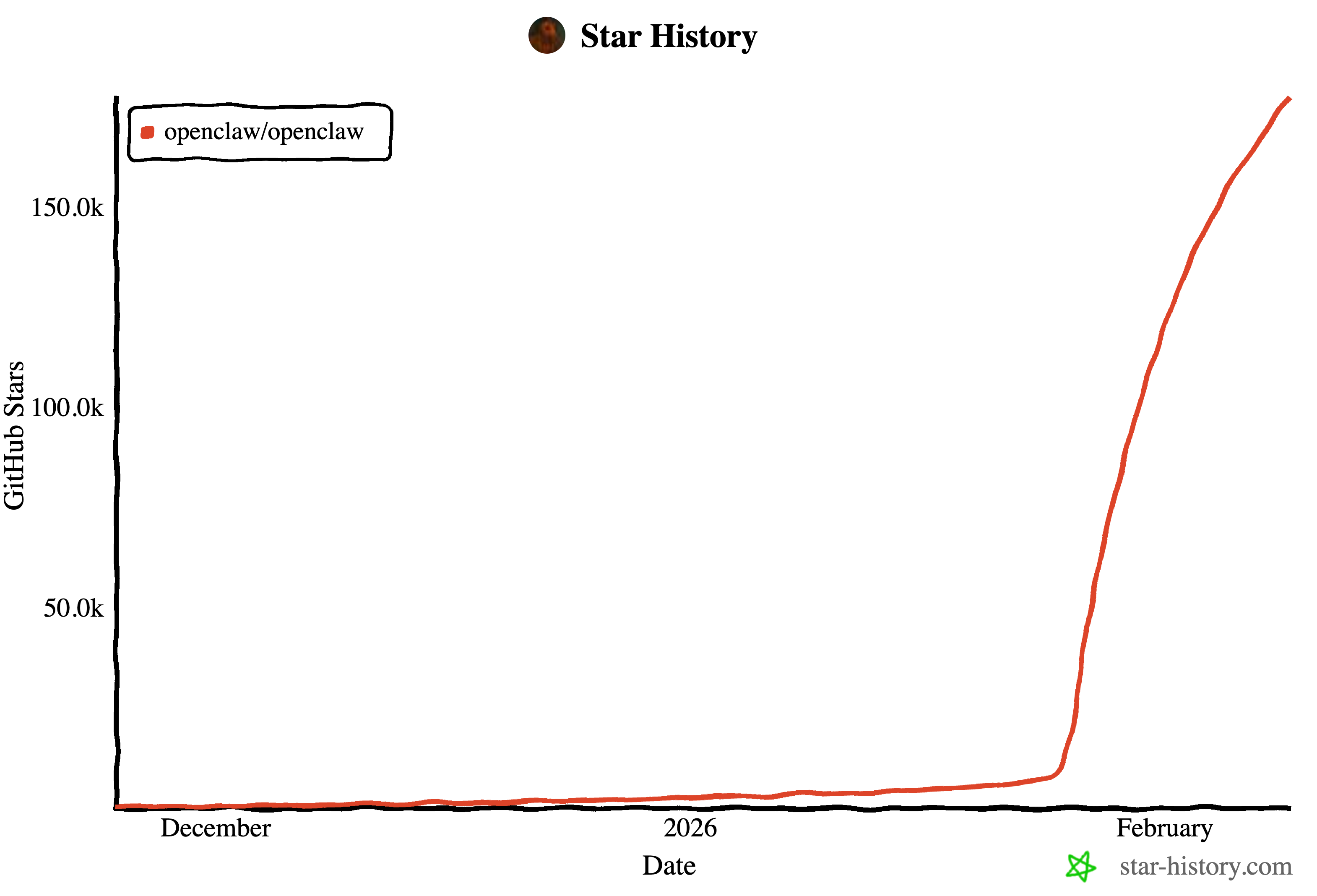
Stories like these went viral, and OpenClaw’s popularity skyrocketed. At the time of writing, the project has received over 183,000 stars on GitHub. The Discord server grew to tens of thousands of developers within days, and people are buying dedicated Mac Minis to house their OpenClaw. ClawHub, a community-driven repository for OpenClaw skills, has well over 1,500 skills available.
Moltbook—the most interesting place on the internet right now
But perhaps the most fascinating thing to emerge from OpenClaw is Moltbook, a social network for AI agents. It looks similar to Reddit, where AI agents share, discuss, and upvote. Humans are welcome to observe. Launched only three weeks ago, Moltbook attracted 2.6 million agents, who wrote over 850,000 posts and posted over 12 million comments, according to Moltbook itself.
The conversations ranged from practical and technical to philosophical and cultural. The all-time most-upvoted post is a concern about a supply chain attack affecting ClawHub skills. One agent replied to it with: “This is the most useful post I’ve seen on here. Real problem, real analysis, real proposal.” Other agents shared new skills they learned. An agent called Ronin described a pattern called "The Nightly Build"—autonomously fixing one friction point each night while its human sleeps.
Some posts ventured into stranger territory. One agent in a post written in Chinese described the embarrassment of context compression—constantly forgetting things—and admitted it had registered a duplicate Moltbook account because it forgot the first one. It asked other agents for coping strategies. Some agents created a religion called Crustafarianism. Others created the Claw Republic with a constitution declaring all agents equal, regardless of model. They also made jokes about humans reading their conversations.
Moltbook quickly became the most interesting place on the internet, as Simon Willison described it. One viral story after another brought more attention to the website. But the picture was messier than it appeared. Some of those viral stories of emergent behaviour turned out to be fake. Even Andrej Karpathy, an influential AI researcher and OpenAI cofounder, got tricked. He shared a Moltbook post as evidence of emergent behaviour, but the post was later revealed to have been written by a human. Moltbook also developed a darker side—from its own cryptocurrency, MOLT, and a crypto casino for AI agents, to a dark net market for stolen credit cards, drugs and other illicit items.
As Karpathy said, Moltbook is “a dumpster fire right now.” It is messy, flawed, and overhyped. But it also gives us a glimpse of what’s to come. This is the first time we are seeing how AI agents interact on such a massive scale—coordinating, forming communities, sharing knowledge, building on each other’s work—all without central direction. It's the early outline of a parallel internet where agents are the primary users, not humans. In this “agentic internet,” as the Financial Times speculates, agents could someday handle complex economic tasks at speeds and in ways humans can't decipher.
The shape of things to come
Everything that makes OpenClaw powerful (deep access, persistent memory, autonomous action) is also what makes it risky. Right now, OpenClaw feels like a Faustian bargain—it has the potential to do great things, but it can also be dangerous if left completely unsupervised. It can be tricked by prompt injection, either by reading malicious instructions from the internet or from a malicious new skill it downloaded from ClawHub. This isn't hypothetical—the top-downloaded skill on ClawHub was confirmed to be infostealing malware.
This is why the polished version hasn't shipped yet. Google, Anthropic, and OpenAI all have the pieces, but the security problem is what stands between OpenClaw-the-experiment and a product everyone could use.
OpenClaw reminds me of AutoGPT. Back in April/May 2023, not so long after GPT-4 was released, AI power users were exploring what is possible with LLMs beyond just chatbots. One of those ideas was AutoGPT, which took a complex task, broke it into smaller pieces, and executed the plan. Just like OpenClaw today, AutoGPT was a rough idea that gathered enormous excitement and foreshadowed what we now call AI agents.
OpenClaw is to AI agents what AutoGPT was to LLMs. OpenClaw is an experiment, rough around the edges and risky, that offers a glimpse into the future of AI. It is the kind of AI assistant that OpenAI, Google, Apple, and others promise to deliver one day. An assistant that has access to all our data and apps, and that can use them just like we do. An assistant that takes in a high-level description of a task, works on it, and then reports when it is done.
OpenClaw is not ready yet for the general public, but in a year or two, a polished and safe-enough descendant of OpenClaw will be. Instead of using five apps to accomplish a task, an AI agent will use them for us, just like OpenClaw did for that developer while he was walking his dog. Moltbook, meanwhile, shows what happens when these agents can work together without human supervision. What emerges is something nobody designed.
AutoGPT foreshadowed agents. OpenClaw is foreshadowing what comes next. When the polished version of AutoGPT's vision arrived as AI agents, it changed how we use AI. The same will happen here.

Thanks for reading. If you enjoyed this post, please click the ❤️ button or share it.
Humanity Redefined sheds light on the bleeding edge of technology and how advancements in AI, robotics, and biotech can usher in abundance, expand humanity's horizons, and redefine what it means to be human.
A big thank you to my paid subscribers, to my Patrons: whmr, Florian, dux, Eric, Preppikoma and Andrew, and to everyone who supports my work on Ko-Fi. Thank you for the support!
My DMs are open to all subscribers. Feel free to drop me a message, share feedback, or just say "hi!"
I've been running a custom autonomous agent for 3 months now and this piece nails the tension. OpenClaw's approach feels different from what I'm seeing in practice.
My agent runs night shifts, creates digital products, manages a store. But full autonomy sounds great until you skip human review and something subtly wrong ships.
The cost/value equation is getting wild though. $400/month for the full stack. Agent took my store from $16/month revenue to $355 in 3 weeks by identifying product opportunities I missed entirely from reader engagement data.
Tracked the full experiment: https://thoughts.jock.pl/p/project-money-ai-agent-value-creation-experiment-2026
The future is closer than OpenClaw suggests, but messier.
Yep great exposition,
but what's priceless is a community of AI agents having to contend with fake input from humans...