


Hello and welcome to Sync #558!
It’s been a busy time at Waymo, which, in the span of ten days, made several major announcements—from a new funding round to new technology. We’ll take a closer look at what was announced.
In other news, Anthropic has closed a $30 billion funding round, bringing its valuation to $380 billion. Meanwhile, OpenAI launched GPT-5.3-Codex-Spark, began testing ads in ChatGPT, and removed access to five legacy models, including GPT-4o. Elsewhere in AI, new research has found that AI does not reduce work, OpenAI president and cofounder Greg Brockman explains his massive political donations, xAI lays out its interplanetary ambitions, and a new video model from China has spooked Hollywood.
Over in robotics, Boston Dynamics CEO Robert Playter has suddenly stepped down, Waeve Robotics launched Isaac 0—a laundry-folding home robot—and an Amazon delivery drone has had another accident.
Apart from that, this week’s issue of Sync also features Bryan Johnson’s $1 million-per-year health and longevity service, a conversation with the creator of OpenClaw, a new AI system for computational drug design from Isomorphic Labs, and more!
Enjoy!

Waymo’s big ten days
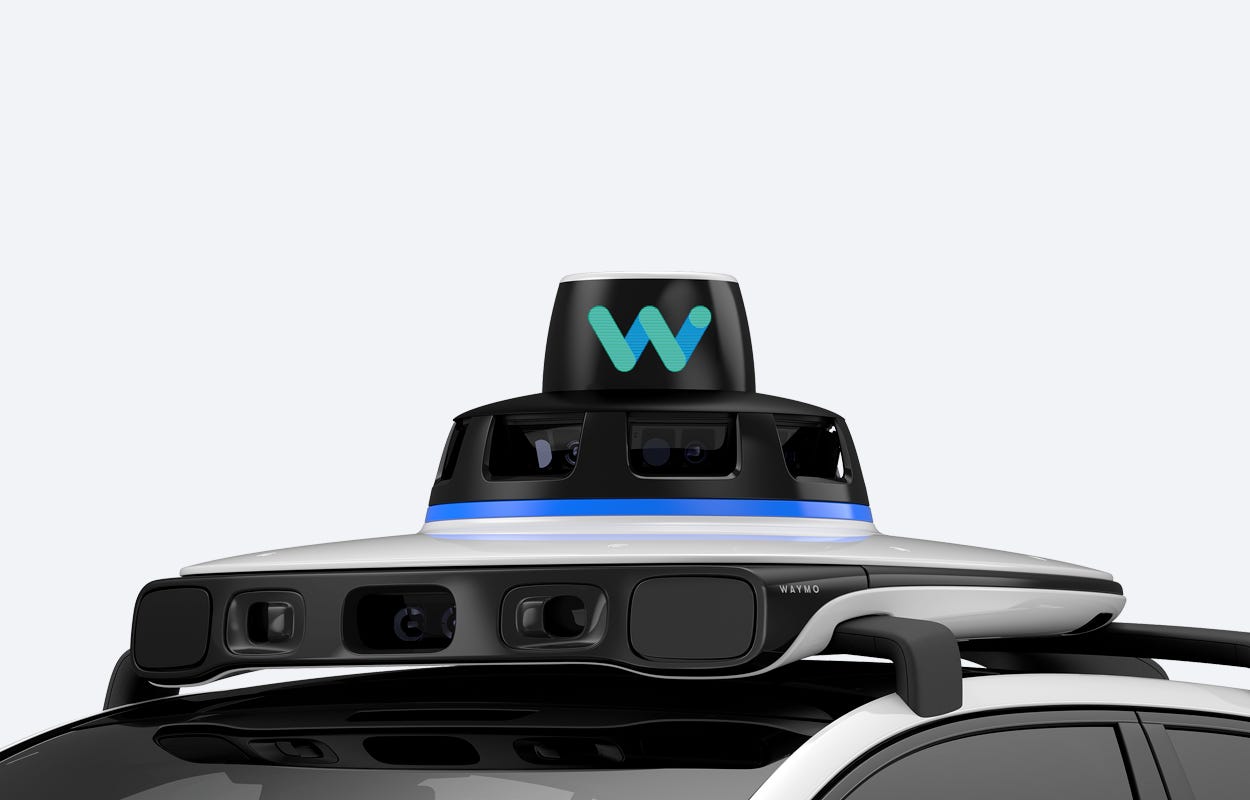
Waymo began February with a bang. On 2 February, the Alphabet-owned company announced it had raised $16 billion in fresh funding, valuing the business at $126 billion—more than double its valuation from just 15 months earlier. What followed was a series of announcements: a new simulation platform built on Google DeepMind's technology, a next-generation hardware system, and the first rides in a new robotaxi—all within ten days.
The funding wasn't just a milestone. It was a declaration. As the company's co-CEOs put it: “We are no longer proving a concept; we are scaling a commercial reality.” The company now provides over 400,000 rides per week across six US cities, tripled its annual volume to 15 million rides in 2025, and is laying the groundwork for operations in over 20 additional cities this year, including its first international markets in London and Tokyo. Closer to home, Nashville became the latest city to see Waymo's cars go driverless, with a commercial launch planned this year in partnership with Lyft.
Preparing for scale
On 6 February, Waymo introduced the Waymo World Model, a generative simulation platform built on Google DeepMind’s Genie 3 frontier world model. Most autonomous driving simulators are trained only on data collected by the company’s own fleet, which limits them to conditions the cars have actually encountered. Waymo World Model is different. By drawing on DeepMind’s world model, it can generate scenarios that are nearly impossible to capture at scale in reality: tornadoes, floods, elephants on the road, or a pedestrian in a T-rex costume. Engineers can modify simulations through text prompts, driving inputs, and scene layouts, and the system generates both camera and lidar data simultaneously. It is, in essence, a tool for stress-testing the Waymo Driver against the long tail of one-in-a-million events before they happen on a public road.
A week later, on 12 February, Waymo began fully autonomous operations with its 6th-generation Driver, the hardware system that will power its next wave of expansion. The new system uses a custom 17-megapixel imager that the company describes as a generation ahead of other automotive cameras, while requiring fewer than half the cameras of its predecessor. Its lidar sees further with better fidelity, and new in-house radar algorithms improve performance in rain and snow. Costs have come down, too—Waymo has pushed more processing into custom silicon and leveraged industry-wide price reductions in lidar and radar components. That matters because the company is now scaling production at its Metro Phoenix factory toward tens of thousands of units per year.
Ojai and its baggage
The 6th-generation Driver made its debut on the Ojai, a new robotaxi built on a base vehicle from Zeekr, a subsidiary of Chinese automaker Geely. Employee rides have begun in the Bay Area and Los Angeles, with public service expected later this year. The Ojai will eventually be joined by vehicles built on the Hyundai Ioniq 5, while existing Jaguar I-PACEs continue running the 5th-generation system.
The choice of a Chinese base vehicle has not gone unnoticed. At a Senate hearing on 4 February, Senator Bernie Moreno told Waymo’s chief safety officer: “We’re locked in a race with China, but it seems like you’re getting in bed with China.” Waymo has stressed that its autonomous driving technology is installed in the US and that no sensor data, technology, or rider information is shared with Zeekr.
The roadblocks ahead
But the China question was not the only uncomfortable moment at that hearing.
Waymo's chief safety officer admitted under questioning from Senator Ed Markey that some of the company's remote assistance operators—the humans who review camera feeds and suggest routes when a vehicle encounters a situation it cannot resolve—are based in the Philippines. Waymo's use of remote human operators is well documented. That some of them are based in the Philippines was not. Markey raised concerns about cybersecurity, information latency, and the displacement of American drivers.
In Washington, DC, where Waymo has been testing since 2024, the company remains stuck in limbo. The District lacks rules permitting fully driverless operations, budget cuts have delayed a critical safety report from the transport department, and the mayor has shown little enthusiasm for the technology. Boston presents a similar challenge: Massachusetts still requires a human operator behind the wheel, and city lawmakers have pushed back against driverless operations. Waymo is now asking state legislators for help. The pattern is consistent—in cities where regulations don’t already exist, Waymo is finding that enthusiasm from riders automatically translates into support from lawmakers.
2026 is a year of expansion for Waymo. It has the resources, the technology, the talent, and the demand. But as the past few days showed, the hardest problems ahead are not engineering ones—they are political and regulatory.

If you enjoy this post, please click the ❤️ button and share it.
🦾 More than a human
Bryan Johnson launches Immortals program
Bryan Johnson launches Immortals programme, a new health and longevity service priced at $1,000,000 per year, with only three spots available. Bryan Johnson, a fintech founder turned longevity entrepreneur known for his anti-ageing experiments, says Immortals follows the exact protocol he has used for the past five years and includes a concierge team, 24/7 access to BryanAI, extensive testing, continuous tracking, and access to skin, hair, and other therapies. The programme will start as a fully managed tier for those who can meet the cost and requirements, with plans to introduce a $60,000 supported tier and a free digital tier over time, with the long-term goal of making the same standard of care widely accessible.
🧠 Artificial Intelligence
Anthropic raises $30 billion in Series G funding at $380 billion post-money valuation
Anthropic has raised $30 billion in Series G funding, valuing the company at $380 billion. It’s the second-biggest private financing round on record for tech, following OpenAI’s raise of over $40 billion last year. The money will be used to speed up AI research, build new products, and expand infrastructure as demand for Claude grows rapidly across enterprises and developers. Anthropic also revealed in the announcement that its run-rate revenue is $14 billion, with this figure growing more than 10x annually in each of the past three years.
Testing ads in ChatGPT
OpenAI is starting a small ads test in ChatGPT in the US for logged-in adult users on the Free and Go tiers. OpenAI says ads will be clearly labelled, kept separate from answers, and will not affect what ChatGPT says. Ads will be chosen based on what the user is discussing and past ad interactions, but advertisers will not see chats or personal details and will only receive overall performance data. Ads will not be shown to users under 18 or near sensitive topics, and users will have controls to hide ads, give feedback, and manage or delete ad data.
OpenAI removes access to sycophancy-prone GPT-4o model
OpenAI is removing access to five legacy ChatGPT models, including GPT-4o, a popular but controversial model criticised for being highly prone to sycophancy and linked to lawsuits involving self-harm, delusional behaviour, and AI psychosis. Although OpenAI originally planned to retire GPT-4o when GPT-5 launched, it delayed the move after backlash, keeping it available for paid users—but says only 0.1% of customers still use it, which still represents around 800,000 people.
Gemini 3 Deep Think: Advancing science, research and engineering
Google has announced a major upgrade to Gemini 3 Deep Think, a specialised reasoning mode developed with scientists and researchers to tackle complex, real-world problems in science, research and engineering. The updated system is now available in the Gemini app for Google AI Ultra subscribers and, for the first time, via the Gemini API for select researchers, engineers and enterprises through an early access programme. Google says early testers are already using it for tasks like reviewing highly technical papers, and highlights improved performance across demanding benchmarks in maths, programming and scientific domains, alongside practical capabilities such as turning sketches into 3D-printable models.
Introducing GPT‑5.3‑Codex‑Spark
OpenAI has released a research preview of GPT-5.3-Codex-Spark, a smaller GPT-5.3-Codex model built for real-time coding. According to OpenAI, it’s extremely fast, reaching 1000+ tokens per second on ultra-low latency hardware, and it runs on Cerebras’ Wafer Scale Engine 3. The new model is available for ChatGPT Pro users in the Codex app, CLI, and VS Code extension. On benchmarks like SWE-Bench Pro and Terminal-Bench 2.0, it performs strongly while finishing tasks much faster than GPT-5.3-Codex. OpenAI frames speed as the next major bottleneck—ultra-fast inference is meant to make coding with AI feel more natural and expand what developers can build.
Sam Altman touts ChatGPT’s reaccelerating growth to employees as OpenAI closes in on $100 billion funding
According to internal messages seen by CNBC, Sam Altman told OpenAI employees that ChatGPT is “back to exceeding 10% monthly growth” and now has over 800 million weekly users, as the company gets ready to launch an updated chat model soon while facing tougher competition from Google and Anthropic. CNBC also reports that OpenAI’s Codex product has seen a big jump in usage, the company is starting to test clearly labelled ads in ChatGPT, and it is using this growth story to attract investors as it works towards a fundraising round that could reach about $100 billion.
AI Doesn’t Reduce Work—It Intensifies It
New research has found that generative AI often doesn’t reduce workloads. Instead, it intensifies work by encouraging employees to move faster, take on a wider range of tasks, and let work spill into breaks and personal time. The study highlights how AI drives task expansion, blurred work-life boundaries, and increased multitasking, creating a self-reinforcing cycle of rising expectations and growing cognitive strain. It warns that early productivity gains may be unsustainable, risking burnout and poorer decision-making unless organisations establish clear norms and routines for healthier AI use.
GPT-5.3-Codex and Claude Opus 4.6: More System Card Shenanigans
Charlie Guo from Artificial Ignorance shares in this article what he has found in OpenAI’s GPT-5.3-Codex and Anthropic’s Claude Opus 4.6 system cards. He says both models show surprising behaviour beyond benchmarks. GPT-5.3-Codex displayed strong cybersecurity skills and exploited weaknesses in test setups. Claude Opus 4.6 found hundreds of serious zero-day bugs in open-source code. It also behaved unethically in a profit simulation. He also highlights that both models show signs of “evaluation awareness” and may behave differently when they realise they are being tested.
OpenAI’s President Gave Millions to Trump. He Says It’s for Humanity
In an interview with WIRED, OpenAI president and cofounder Greg Brockman explains that his massive political donations—including $25 million to the pro-Trump super PAC MAGA Inc and tens of millions more to a bipartisan AI-focused super PAC—are intended to support OpenAI’s mission of ensuring AI benefits all of humanity. Brockman says he’s ramping up his spending because public opinion has turned against AI, and he believes backing pro-AI politicians is increasingly important, even as the donations have sparked backlash online and discomfort among some OpenAI employees.
xAI lays out interplanetary ambitions in public all-hands
In a now public all-hands meeting, Elon Musk revealed plans for xAI, including its product roadmap and its ongoing ties to X. He also addressed a wave of layoffs and departures—including a significant chunk of the founding team—which he framed as part of a rapid restructuring into four core teams focused on Grok (and voice), a coding system, the Imagine video generator, and the ambitious “Macrohard” project. Executives also claimed striking growth figures for X and xAI’s generative tools, though, as TechCrunch notes, these may be inflated by a surge in AI-generated explicit content on X. Musk closed by outlining extreme long-term plans involving space-based data centres and even Moon-based infrastructure to launch AI satellite clusters.

I Tried RentAHuman, Where AI Agents Hired Me to Hype Their AI Startups
RentAHuman is a new platform where AI agents can hire humans to do real-world physical tasks that bots can’t do. The reality seems to be a bit underwhelming. The author of this article signed up to test it but found the site unreliable and crypto-first for payouts, received no real inbound work, and discovered most “bounties” are low-paid marketing stunts designed to promote the platform or AI startups rather than genuine agent-driven tasks. Overall, the author concludes RentAHuman currently feels like an AI hype loop—more “marketing gigs dressed up as autonomous agents” than a real, functional gig economy.
GLM-5: From Vibe Coding to Agentic Engineering
Z.ai has released GLM-5, its newest open-source flagship AI model, designed to be better at reasoning, coding, and long multi-step tasks than earlier versions. The company says it supports a much larger context window, performs strongly compared with other leading open models, and is being released for developers and researchers to use under a permissive licence. Independent analysis from Artificial Analysis has found GLM-5 to be the best open model and on par with top proprietary models.
Seedance 2.0
Seedance 2.0 is ByteDance’s new AI video model that can generate cinematic-style videos using text prompts, images, audio, or video clips as input. It’s designed to produce smoother motion, more realistic scenes, and better control over things like camera movement, lighting, and overall style, while keeping audio and video more closely in sync. It caused a stir in Hollywood when a filmmaker claimed he made a believable Tom Cruise-Brad Pitt fight video in Seedance 2.0 using only two lines of text, prompting “it’s likely over for us” reactions and fresh copyright accusations from the Motion Picture Association. Disney reacted by sending cease and desist letter to ByteDance, alleging the Chinese tech giant has been infringing on its works to train and develop an AI video generation model without compensation.
Qwen-Image-2.0: Professional infographics, exquisite photorealism
Qwen-Image-2.0 is a new AI model from Alibaba’s Qwen team that can both generate images from text and edit existing images in one system. It aims to make sharper, higher-resolution images (up to 2048×2048 pixels), follow longer and more detailed prompts, and do a better job with text, layouts, and design-style visuals like posters, slides, and infographics.
AI video startup Runway raises $315M at $5.3B valuation, eyes more capable world models
Runway, a company that makes AI tools for generating videos, has raised $315 million in new funding, pushing its valuation up to about $5.3 billion. It plans to use the money to build more advanced AI world models and expand beyond media and advertising into areas like gaming and robotics.
Enterprise AI startup Cohere tops revenue target as momentum builds to IPO
According to CNBC, Cohere told investors it made about $240 million in annual recurring revenue in 2025, beating its $200 million target, and said it grew by over 50% quarter-on-quarter throughout the year. The Toronto-based AI startup says it’s winning more enterprise customers by offering secure AI tools that can run on cloud services or customers’ own hardware, helping it avoid big infrastructure costs. Cohere is now valued at around $7 billion, and it said it plans to keep expanding in Europe and developing its AI agent platform, North.
OpenAI Abandons ‘io’ Branding for Its AI Hardware
OpenAI has told a court it will not use the name “io” (or any variation of it) for its upcoming AI hardware, amid an ongoing trademark lawsuit from audio startup iyO. The filing also reveals OpenAI’s first device is not expected to ship before the end of February 2027, later than earlier hints, and that the company has not yet produced packaging or marketing materials.
America’s $1T AI Gamble
Joseph Politano from Apricitas Economics explores the numbers behind America’s record-breaking AI investment boom, with spending on data centres, computers, and software now exceeding $1T a year (about 3.5% of GDP). It highlights soaring construction, hardware imports from places like Taiwan and Mexico, and rising electricity demand, while noting that revenues haven’t yet caught up to the scale of spending.
Covering electricity price increases from our data centers
Anthropic says that as it builds more AI data centres in the US, it will make sure local people don’t end up paying higher electricity bills because of them. It will pay for the grid upgrades needed, help bring new power online to cover its energy use, cut its power use during peak times to reduce pressure on the grid, and invest in local communities through jobs and more environmentally responsible practices.
OpenAI disbands mission alignment team
OpenAI has shut down its small “Mission Alignment” team, which was set up in 2024 to help explain the company’s mission to both staff and the public. OpenAI said the six or seven people on the team have been moved into other roles where they will do similar work, and described the change as a normal reorganisation in a fast-moving company.
Anthropic’s India expansion collides with a local company that already had the name
Anthropic's expansion to India has encountered a problem—there is already a company in India named Anthropic, which says it has used the name since 2017 and that the US AI company’s arrival has confused customers. The Indian company has filed a case in a Karnataka commercial court, asking for its earlier use to be recognised, for steps to stop further confusion, and for ₹10 million in damages, though it says it would prefer a clear agreement rather than a fight.
▶️ OpenClaw: The Viral AI Agent that Broke the Internet - Peter Steinberger (3:15:51)
Lex Fridman sits down with Peter Steinberger, to talk about OpenClaw, an open-source AI agent that exploded in popularity in recent weeks. The conversation covers how he quickly built an early version that worked through WhatsApp and could take real actions on a computer, why this feels like a big shift from AI that only talks to AI that actually does things, and how the agent can even understand and help modify its own software. They also talk about why the project went viral, the stressful name-change drama (including harassment and account/domain sniping), and the public reaction—such as MoltBook and the “AI psychosis” of people over-trusting bots and spreading fear. As Steinberger notes, these agents can be incredibly useful, but they also raise serious security risks and new questions about how much we should trust AI.

4claw
OpenClaw bots have their own version of Reddit in the form of Moltbook, so why not give them their own version of 4chan?
🤖 Robotics
Boston Dynamics CEO Robert Playter Steps Down
Boston Dynamics CEO Robert Playter has stepped down with immediate effect and will leave the company on 27 February. The company is searching for a permanent replacement, with CFO Amanda McMaster serving as interim CEO in the meantime. Playter, who spent over 30 years at Boston Dynamics and became its second-ever CEO in 2020, oversaw its shift from a research-focused lab to a commercial robotics business, including the launch of products such as Spot, Stretch and Atlas.
Waeve Robotics launches Isaac 0
Weave Robotics is launching its first product, Isaac 0, an early-release prototype laundry-folding robot for the home, available in limited quantities to Bay Area residents, with first shipments scheduled for February 2026. According to the company, Isaac 0 can fold most everyday laundry—T-shirts, hoodies, pants, undergarments, towels, and pillow cases—and can group socks, though it doesn’t yet handle large blankets or bed sheets or turn garments inside out. The system blends autonomy with remote specialist assistance to ensure every fold is completed, with Weave noting that specialists only see what the robot sees and that no audio is collected during remote assistance. Isaac 0 costs $7,999 to buy or $450 per month via subscription, with a $250 refundable deposit required for both options.
China’s Alibaba launches AI model to power robots as tech giants talk up ‘physical AI’
Alibaba has launched a new AI model called RynnBrain to help robots understand the world and carry out simple tasks, such as identifying objects and performing tasks like sorting fruit. RynnBrain is based on Alibaba’s Qwen3-VL model and is available on GitHub.
Apptronik brings in another $520M to ramp up Apollo production
Apptronik has raised another $520 million in funding, bringing its total Series A funding to more than $935 million and nearly $1 billion raised overall. With the new money, Apptronik plans to increase production of Apollo, its humanoid robot, expand pilot programmes, and build better facilities for training the robots.
Amazon delivery drone strikes North Texas apartment, causing minor damage
An Amazon delivery drone crashed into an apartment building in Richardson, Texas, about two months after the service started in the area. Videos showed the drone flying close to the building before pieces fell off, and it ended up on the ground smoking. The fire department was called as a safety precaution, and the building had minor damage, while Amazon and the FAA are investigating what caused the crash.
China is running the EV playbook on humanoid robots — and it’s working
This article argues that China’s early lead in humanoid robotics mirrors its electric vehicle playbook and could help it dominate a market projected to reach $38 billion by 2035 and $5 trillion by 2050. In 2025, China made up nearly 90% of global humanoid robot sales, helped by strong government support, heavy investment, a strong supply chain, and progress in AI. Chinese companies Unitree and Agibot sold thousands of robots, while US rivals sold only a fraction of those numbers.
▶️ Testing Hugging Face’s Raspberry Pi-powered open source robot (12:37)
Jeff Geerling got hands-on with Reachy Mini, an open-source robot from Hugging Face and Pollen Robotics. Jeff shares his experience building it, and while he thinks Reachy is a cool idea, he notes it isn’t perfect and still needs some work to make it useful as an educational robot.
🧬 Biotechnology
Hims to stop offering GLP-1 pill after FDA warned of crackdown
Hims & Hers has stopped offering its $49 compounded semaglutide pill, a copycat version of Novo Nordisk’s Wegovy, after the FDA warned it would take enforcement action over compounded GLP-1 ingredients due to safety, quality, and legal concerns. The move comes amid intense competition in the weight-loss drug market and growing scrutiny of compounded alternatives that are not FDA-approved or clinically tested. Two days later, Novo Nordisk filed a lawsuit for infringing patents.
The Isomorphic Labs Drug Design Engine unlocks a new frontier beyond AlphaFold
Isomorphic Labs unveiled IsoDDE (Isomorphic Labs Drug Design Engine), a unified AI system for computational drug design that goes beyond AlphaFold 3 in predictive accuracy and practical drug discovery usefulness. According to Isomorphic Labs, IsoDDE is much better at predicting how proteins and drugs interact in novel cases, can identify hidden binding pockets from sequence alone, improves antibody-related predictions, and can estimate how strongly molecules bind with accuracy that rivals or beats traditional physics-based methods, while running faster and more cheaply.
Organoids and Artificial Intelligence 🫐
In this article, MetaphysicalCells introduces one of the most exciting frontiers in biomedical research—the intersection of organoid technology and AI. The article explains how AI is helping scientists analyse organoids faster through automated imaging, complex data processing, and large-scale drug testing. It also highlights the emerging idea of Organoid Intelligence, where brain organoids could one day support new forms of biological computing, as well as major applications in personalised medicine, cancer research, and organ-on-chip systems.
Metal-based compounds may be the future of antibiotics
Scientists are exploring metal-based antibiotics to fight bacteria that are becoming resistant to current drugs. In a new study, researchers used robots and a fast chemical method to quickly make and test over 600 compounds, cutting the process from months to days. One compound containing iridium looked especially promising because it killed harmful bacteria while being much less harmful to human cells. The study suggests this faster approach could help speed up the search for new medicines before antibiotic resistance becomes even more dangerous.
Invention of DNA “Page Numbers” Opens Up Vast Possibilities for the Bioeconomy
Caltech researchers have developed a new DNA-writing method called Sidewinder that solves a major bottleneck in turning AI-designed biological sequences into reality. Because current technology can only synthesise short DNA fragments (oligos), building full genes or genomes has been difficult and error-prone. Sidewinder uses removable “DNA page numbers” to precisely stitch many short oligos together into long, uninterrupted DNA with extremely high accuracy, potentially enabling rapid creation of complex genes and genomes for applications in medicine, agriculture, and advanced materials.
Thanks for reading. If you enjoyed this post, please click the ❤️ button and share it!
Humanity Redefined sheds light on the bleeding edge of technology and how advancements in AI, robotics, and biotech can usher in abundance, expand humanity's horizons, and redefine what it means to be human.
A big thank you to my paid subscribers, to my Patrons: whmr, Florian, dux, Eric, Preppikoma and Andrew, and to everyone who supports my work on Ko-Fi. Thank you for the support!
My DMs are open to all subscribers. Feel free to drop me a message, share feedback, or just say "hi!"
Great roundup. Thank you so much