


Hello and welcome to Sync #561!
This week, we complete the Anthropic vs Pentagon saga by examining the immediate fallout from the Pentagon formally designating Anthropic a supply-chain risk to American national security.
Elsewhere in AI, OpenAI released GPT-5.4 and GPT-5.3 Instant, while Google released Gemini 3.1 Flash-Lite. We also have new M5 Pro and M5 Max chips from Apple; a story about how Cloudflare “stole” Next.js with Claude Code; Jensen Huang saying Nvidia is pulling back from OpenAI and Anthropic; OpenAI rethinking its ecommerce strategy; and something happening with the Qwen team.
Over in robotics, Xiaomi has begun testing its own humanoid robots in electric car factories, Agility Robotics has changed its name, and the lead of OpenAI’s robotics team has left the company.
Other than that, this week’s issue of Sync also features a brain–computer interface company raising $230 million to treat blindness, Anthropic’s report on the impact of AI on jobs, a Google moonshot spinoff looking to ship city-scale laser Internet, Meta reportedly working on a smartwatch, human neurons inside a computer playing DOOM, and more!
Enjoy!

Anthropic vs Pentagon: The Fallout

It is official now. On Thursday, Anthropic received a letter from the Department of War confirming what Pete Hegseth had threatened and Donald Trump had demanded: the company has been formally designated a supply-chain risk to American national security. The designation—normally reserved for foreign adversaries—is one of the first times it has been applied to a US company. Anthropic says it will challenge it in court.
Last week, we covered the ultimatum. This is what came after.
The memo and the apology
Within hours of the designation, The Information published an internal message from Anthropic CEO Dario Amodei to staff. In it, he called OpenAI’s Pentagon deal “safety theatre,” described Sam Altman’s public statements as “straight up lies,” and dismissed OpenAI’s employees as “sort of a gullible bunch.” He said the administration was targeting Anthropic because it had not offered “dictator-style praise” to Trump.
Dario Amodei apologised for the tone days later, calling it a product of a chaotic day rather than a reflection of his settled thinking. His official statement was conciliatory to the point of deference, insisting that Anthropic and the Department of War shared far more than divided them. He offered to keep providing Claude to the military at minimal cost during the transition, so that troops relying on the technology would not lose access mid-operation.
The contrast between the two documents—one raw, one polished—tells the story of a company recalibrating in real time.
The public responds
Whatever the designation cost Anthropic in Washington, it earned back in public sympathy.
ChatGPT uninstalls surged 295% the day after OpenAI announced its Pentagon deal, and one-star reviews for the app jumped 775%. QuitGPT, a boycott group calling on people to leave ChatGPT, estimated that more than 4 million customers had pledged to do so. Claude climbed to the top of the US App Store—the first time any AI assistant had displaced ChatGPT—and hit number one in six other countries, including Canada and Germany.
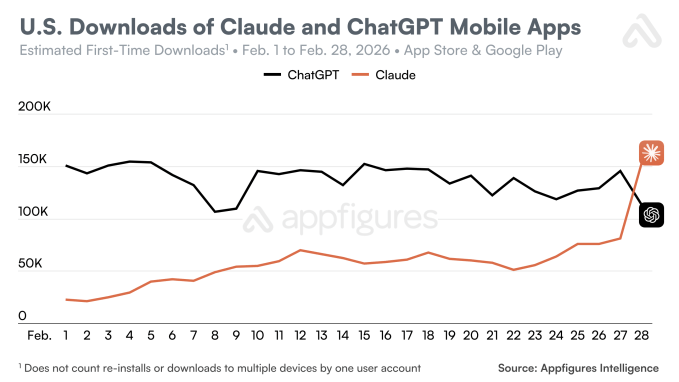
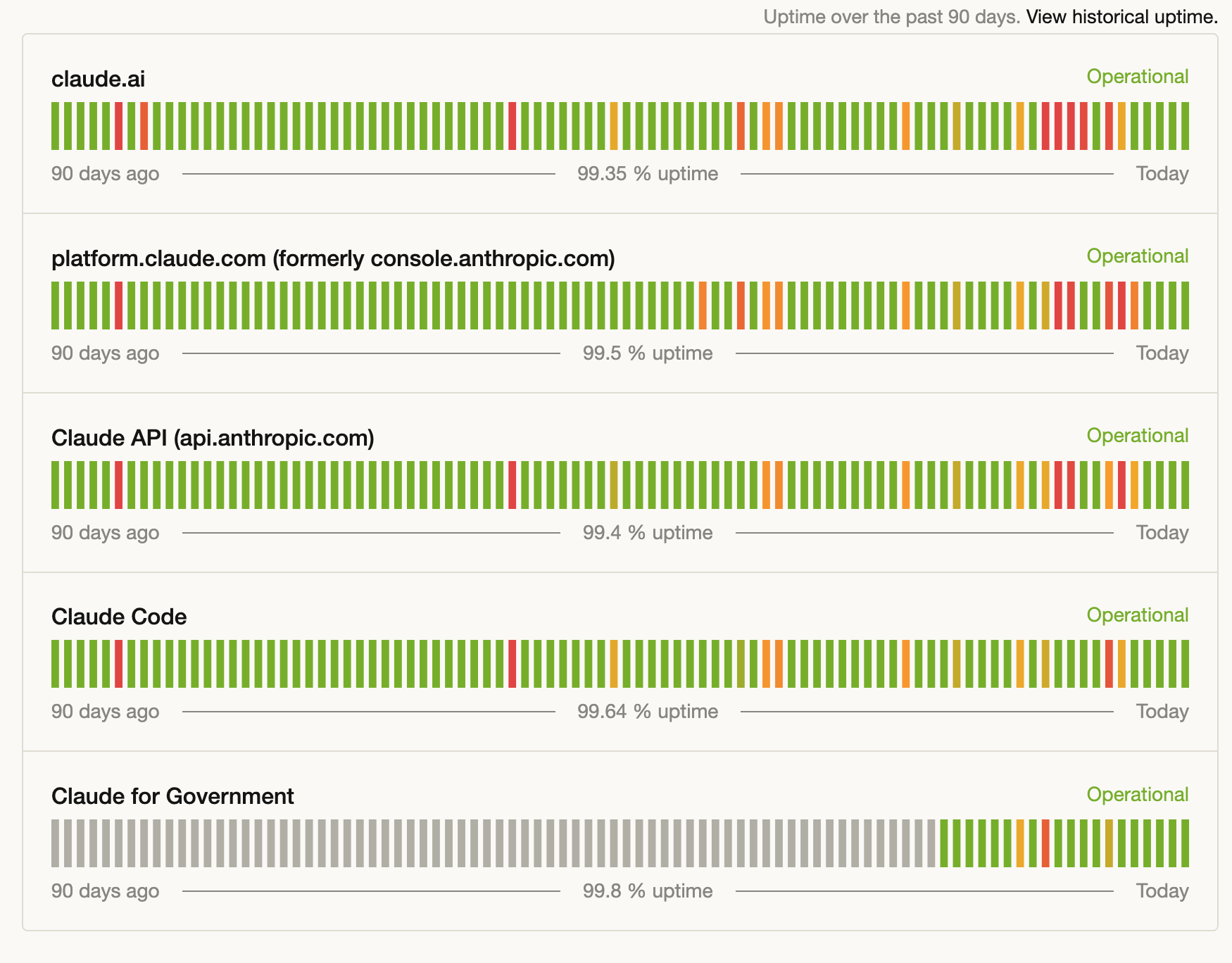
The surge was so large that Anthropic’s own infrastructure couldn't keep up with demand, resulting in multiple outages in the days that followed.
OpenAI’s reckoning
OpenAI, meanwhile, struggled to contain the fallout from its own deal. Altman admitted in a staff memo that the announcement had looked “opportunistic and sloppy,” and told employees at an all-hands meeting that the backlash was “really painful.” The company quietly amended the terms of its agreement to explicitly prohibit domestic surveillance, after an OpenAI researcher acknowledged that the original language had left “legitimate questions unanswered.”
At a Morgan Stanley conference the day before, Altman had offered his broader defence: elected officials, not technology executives, should determine how AI is used in national defence. It is a reasonable position in the abstract. It is also a convenient one when the alternative is losing a contract.
What it costs
So, where does this leave Anthropic? The company is, by several measures, in the strongest commercial position of its life. Its revenue run rate has roughly doubled since the end of 2025 to nearly $20 billion, driven by products like Claude Code. Its valuation sits at $380 billion. It has raised more than $60 billion from over two hundred investors.
The company is widely expected to be preparing for an IPO. Whether investors will back a company that its own government has labelled a national security threat is a question that did not exist a week ago.
How much is now in jeopardy depends on how far the designation reaches. Amodei has argued that the law is narrow by design, covering only Claude's direct use in Pentagon contracts. It does not, he insists, reach every interaction between Anthropic and companies that happen to do business with the military. Microsoft backed this reading, saying its legal team had determined it could keep offering Claude to all customers outside the Department of War. But Lockheed Martin has already cut ties, and Emil Michael, the undersecretary of defence for research and engineering, posted on X that there is “no active negotiation” with Anthropic—shutting down Amodei’s claim that productive conversations were ongoing. The administration has taken this from a threat to a formal designation in under a week. There is no reason to think it will stop there.
Anthropic’s legal challenge will be the next chapter. Until then, the company sits at its commercial peak and under siege from its own government.

If you enjoy this post, please click the ❤️ button and share it.
🦾 More than a human
Brain Tech Startup Science Corp. Raises $230 Million to Treat Blindness
Science Corp. has raised $230 million, valuing it at $1.5 billion and making it the second-most valuable brain-implant company after Neuralink. The funding will help commercialise PRIMA, a small chip implanted in the eye that works with special glasses to restore vision in blind patients. In trials, the device improved sight in most participants. Science Corp. has applied for regulatory approval in Europe and the US, and plans to expand trials to other eye diseases. It is also working on a more advanced brain implant using engineered neurons, with human testing expected by late 2027.
🧠 Artificial Intelligence
How we rebuilt Next.js with AI in one week
Cloudflare may have pulled off one of the greatest heists in software history. Using Claude Code and about $1,100 worth of tokens, the team at Cloudflare managed to rebuild Next.js, a popular web framework, largely through vibe coding. According to Cloudflare, Vinext (as the new framework is called) delivers build times up to 4× faster and produces client bundles up to 57% smaller than Next.js. The company also claims that some customers are already using it in production. If you want to learn more about Vinext and its implications for software development, I recommend this video by Mo Bitar on the topic.
Introducing GPT‑5.4
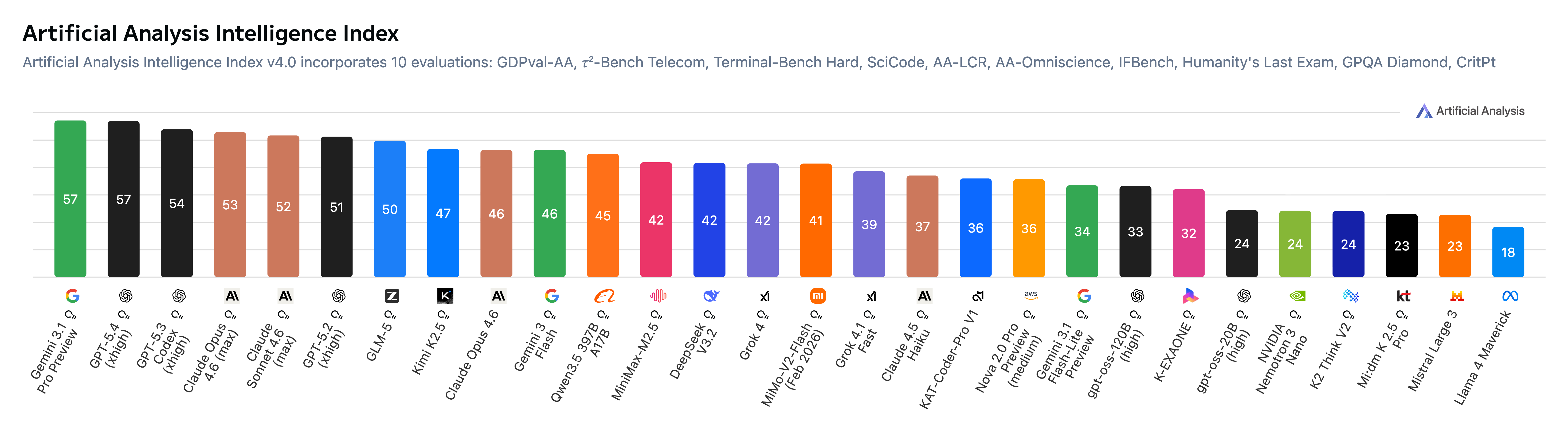
OpenAI has released GPT-5.4, calling it its most capable frontier model for professional work, now available across ChatGPT, the API, and Codex, alongside a GPT-5.4 Pro variant for the more demanding tasks. According to OpenAI, GPT-5.4 matches or exceeds industry professionals in 83% of knowledge work comparisons, is 33% less likely to produce false claims than GPT-5.2, and is the first general-purpose model in its lineup with native computer-use capabilities. The release also introduces "tool search" for more efficient agentic workflows, with a higher per-token price offset by improved token efficiency. Again, OpenAI only compares new models with its own models, but according to independent benchmarks from Artificial Analysis, GPT-5.4 matches the performance of Gemini 3.1 Pro and is ahead of Claude Opus 4.6.
GPT‑5.3 Instant: Smoother, more useful everyday conversations
OpenAI has introduced GPT-5.3 Instant, an update to ChatGPT's most-used model focused on improving everyday conversational quality rather than benchmark performance. The update aims to reduce unnecessary refusals, disclaimers, and preachy preambles, deliver better-synthesised answers when searching the web, and adopt a more natural, less overbearing tone. According to OpenAI's internal evaluations, the model also reduces hallucination rates by up to 26.8% compared to prior versions, and is said to produce stronger creative writing. GPT-5.3 Instant is available now to all ChatGPT users and via the API, with the previous version set to be retired on 3 June 2026.
Gemini 3.1 Flash-Lite: Built for intelligence at scale
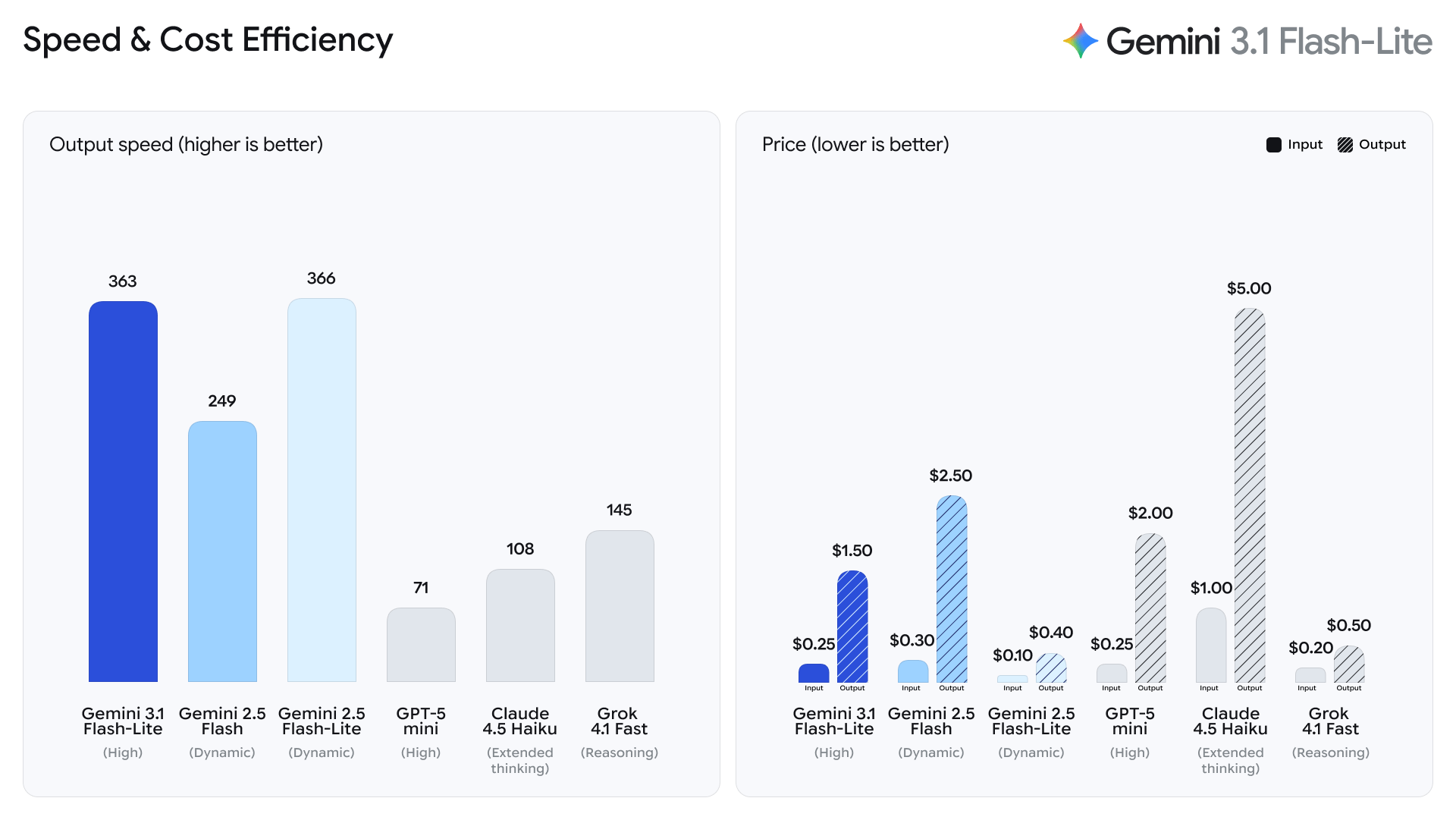
Google released Gemini 3.1 Flash-Lite, its fastest and most cost-efficient Gemini 3 series model, designed for high-volume workloads at scale. According to Google, 3.1 Flash-Lite delivers 2.5 times faster time to first answer token and a 45% increase in output speed compared to Gemini 2.5 Flash, while achieving strong results on reasoning and multimodal benchmarks. The new model is available in preview via Google AI Studio and Vertex AI.
Apple debuts M5 Pro and M5 Max to supercharge the most demanding pro workflows
Apple has launched the new M5 Pro and M5 Max chips. The new chips feature Fusion Architecture, which allows Apple to fuse two dies into a single SoC. The two dies include a powerful new CPU, scalable GPU, Media Engine, unified memory controller, Neural Engine, and Thunderbolt 5 capabilities. According to benchmarks provided by Apple, M5 Pro delivers over 4x the peak GPU compute compared to M4 Pro, and over 6x the peak GPU compute of M1 Pro for AI performance. Meanwhile, M5 Max offers over 4x the peak GPU compute compared to the previous generation, and over 6x the peak GPU compute of M1 Max for AI performance. We have to wait for independent reviewers to confirm these results, but if true, this makes Apple machines with M5 Pro and M5 Max good options for local AI development.
Jensen Huang says Nvidia is pulling back from OpenAI and Anthropic, but his explanation raises more questions than it answers
Nvidia CEO Jensen Huang has indicated the company's recent investments in OpenAI and Anthropic are likely its last in both, citing their anticipated IPOs as closing the window—though, as TechCrunch reports, that explanation doesn't fully hold up given how late-stage investing typically works. Nvidia's investment in OpenAI's latest round came in far below its original pledge, and its relationship with Anthropic has been strained by public disagreements over AI ethics and military use. With the two companies now heading in opposite directions politically, Nvidia appears to be quietly backing away from a situation that has grown too complicated.
Nvidia Plans New Chip to Speed AI Processing, Shake Up Computing Market
Nvidia is planning to launch a new chip designed specifically for running AI applications, the Wall Street Journal reports, using technology from Groq, a startup it bought for $20 billion. The move comes as AI companies increasingly need cheaper, less power-hungry chips to run tools like coding assistants and AI agents, rather than the expensive GPUs Nvidia is known for.

AI companies are spending millions to thwart this former tech exec’s congressional bid
Alex Bores, a New York politician and former Palantir employee, is running for Congress while facing a massive ad campaign funded by a $125 million Silicon Valley super PAC called Leading the Future, whose backers include OpenAI’s Greg Brockman and venture capital firm Andreessen Horowitz. The PAC is targeting Bores because he sponsored a law requiring large AI companies to publish safety plans, and it aims to block similar regulation across the country. Meta is separately spending $65 million to elect tech-friendly state candidates. Bores argues this flood of industry money is meant to bully lawmakers out of regulating AI, and that most people simply want sensible oversight of a fast-moving technology.
ChatGPT users research products but won’t buy there, forcing OpenAI to rethink its commerce strategy
OpenAI is stepping back from direct purchases in ChatGPT after almost no merchants signed up, and users showed little interest in buying through the chatbot. Transactions will instead go through partner apps like Instacart and Expedia, meaning OpenAI loses out on potential commission revenue at a time when it badly needs new income streams ahead of its planned IPO.
Something is afoot in the land of Qwen
Something is happening inside the Qwen team—and it doesn't look good. Junyang Lin, the lead researcher behind Alibaba’s open-weight Qwen models, abruptly resigned, reportedly after a reorganisation placed a Google Gemini hire above him. Several other core contributors followed suit the same day, prompting an emergency all-hands attended by Alibaba’s CEO. With the highly regarded Qwen 3.5 family just released, the departures raise serious questions about the future of one of the most important open-weight AI efforts.
AI Coding Startup Cursor Hits $2 Billion Annual Sales Rate
The AI coding startup Cursor has hit $2 billion in annualised revenue, doubling in three months, with roughly 60% coming from corporate customers ranging from OpenAI to Budweiser. Valued at $29.3 billion, the company is among the fastest-growing startups ever.
xAI loses bid to halt California AI data disclosure law
A California court has rejected xAI's attempt to block a state law requiring AI companies to disclose the data used to train their models. xAI claimed the law threatened its trade secrets and free-speech rights, but the judge ruled the challenge was unlikely to succeed. The decision strengthens California's push to regulate AI transparency.
Introducing Glaze
Raycast, makers of the popular Mac productivity tool, joins the AI coding scene with Glaze, a new tool that lets users create native Mac desktop apps. Glaze differentiates itself from browser-based AI app builders by producing real desktop applications with offline support, keyboard shortcuts, and file system access. The tool includes a public store and private team stores where users can share and customise apps.
Labor market impacts of AI: A new measure and early evidence
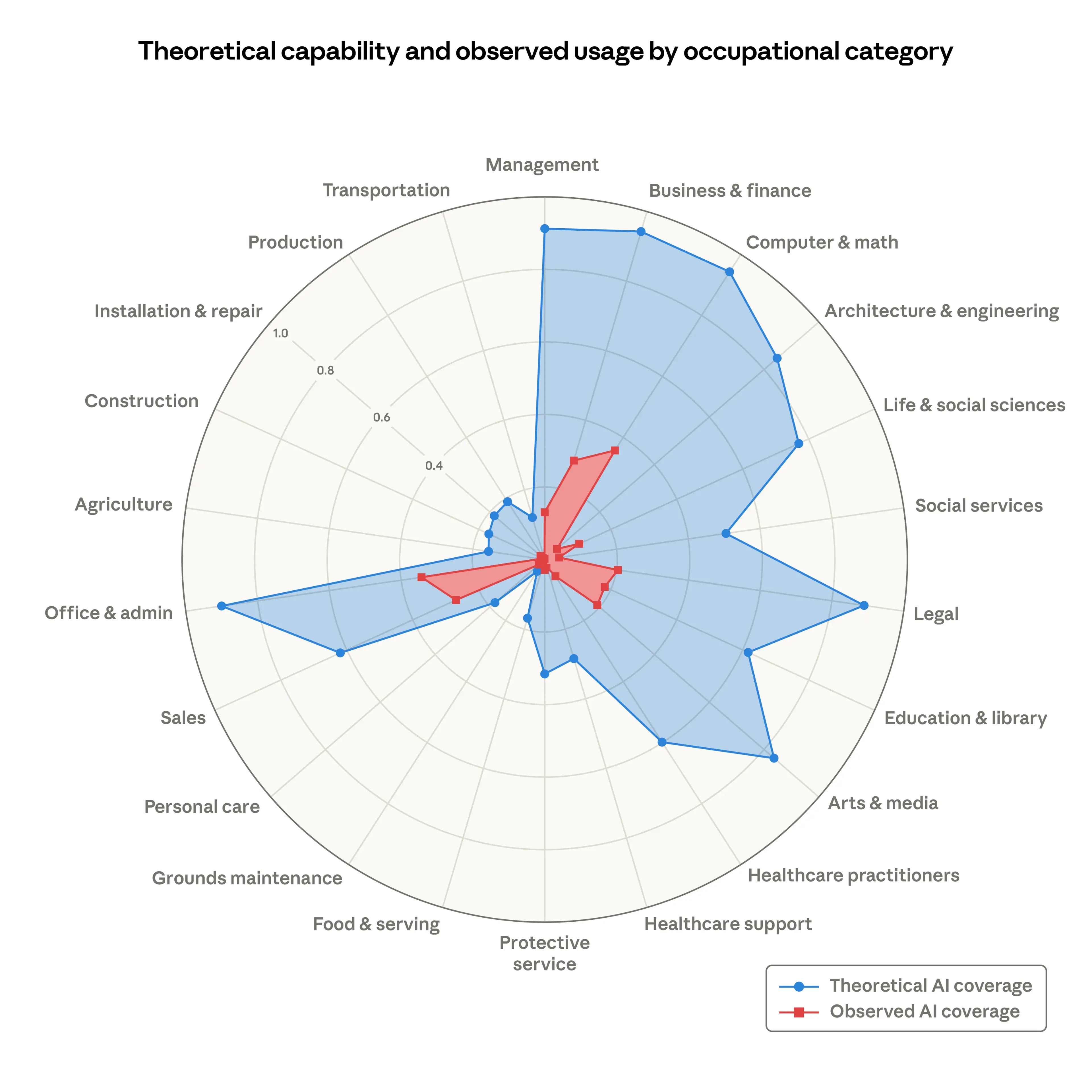
Anthropic released a new report investigating the impact of AI on labour markets. The study finds actual AI adoption remains far below its theoretical potential, with computer programmers, customer service representatives, and data entry keyers facing the highest exposure. While there is no significant rise in unemployment among exposed workers since late 2022, early evidence suggests hiring of younger workers into these roles has begun to slow.
🤖 Robotics
Xiaomi trials humanoid robots in its EV factory — says they’re like ‘interns’
Xiaomi begins testing its own humanoid robots in its electric car factories, with two robots able to handle 90% of tasks like fitting nuts and moving materials. President Lu Weibing said the robots can match the factory's rapid pace of one car every 76 seconds, though he described them as more like "interns" at this stage. Xiaomi sees robotics as a key future focus but says it is still too early to judge the market's full potential.
Agility Gets a New Brand
Agility Robotics has rebranded to Agility, dropping "Robotics" from its name to signal the expansion beyond robotics into new industries and use cases. The company, which has deployed humanoid robots in real industrial settings for over three years with partners like Amazon, GXO and Toyota Canada, says it remains on track to deliver the first cooperatively safe humanoid in 2026.
OpenAI robotics lead Caitlin Kalinowski quits in response to Pentagon deal
Caitlin Kalinowski, who joined OpenAI in late 2024 to lead its robotics team, has resigned over the company's Pentagon agreement, arguing the deal was rushed without proper governance safeguards on surveillance and lethal autonomy.
▶️ Most Humanoid Startups Haven’t Shipped. This One Has. (48:53)
In this conversation on the Automated podcast, Rob Cochran, co-founder of Fauna Robotics, introduces Sprout—a lightweight, 45-pound (about 20kg) humanoid developer platform priced at around $50,000, with ambitions to drop below $10,000 as production scales. Fauna is targeting researchers, AI labs, and companies like Disney Imagineering and Boston Dynamics who want a safe, expressive robot for use in human environments, backed by an SDK that lets developers build on it out of the box. Cochran likens the approach to early Apple computers in schools: get a capable, accessible platform into enough hands to ignite the ecosystem needed to eventually bring humanoid robots into the home.
Vicarious Surgical faces NYSE delisting again
Vicarious Surgical, a developer of robotic systems for minimally invasive surgery, faces delisting from the NYSE after its market capitalisation fell below the exchange's $15 million threshold, with trading suspended and shares moved to the OTC market. This marks the second time the company has breached listing standards, having previously conducted a reverse stock split in 2024 to address similar issues. The pattern of repeated delays to its V1.0 platform and shrinking valuation raises serious questions about whether Vicarious can secure the funding and momentum needed to bring its robot to market.

Rise of the rice robots—creating active smart materials
Rice grains exhibit an unusual "rate softening" property, becoming weaker under fast compression but staying strong under slow pressure. By combining rice with materials like sand that behave oppositely, researchers engineered a metamaterial that automatically adjusts its stiffness depending on impact speed—without electronics or sensors. Potential applications include soft robotics and adaptive protective gear that responds instantly to impact.
🧬 Biotechnology
▶️ Living Human Brain Cells Play DOOM on a CL1 (6:28)
In 2022, Cortical Labs, a company working on biological computing, grew human brain cells on a microchip and taught them to play Pong. It was a big achievement, but the internet had one question—can they play DOOM? Four years later, Cortical Labs came back and said yes, they can. In this video, researchers show how they made it happen.
Evo 2: One Year Later
About a year ago, Arc Institute released Evo 2—a large-scale DNA language model trained across all domains of life. Since then, the model has seen widespread adoption, with researchers applying it to tasks from Alzheimer's risk prediction to 3D genome analysis. Headline achievements include the first experimentally validated AI-designed organisms—functional bacteriophages—and controllable epigenomic designs in mammalian cells. The team now aims to scale up to engineering entire genomic regions through iterative "read-write-think" loops blending multi-omics data with generative AI.
First-ever in-utero stem cell therapy for fetal spina bifida repair is safe, study finds
UC Davis Health has safely completed the first-ever trial combining fetal surgery with stem cell therapy for spina bifida, a birth defect where the spine fails to close properly, potentially causing lifelong disabilities. In the trial, a patch of placenta-derived stem cells was placed over the exposed spinal cord during standard fetal surgery on six babies. All six had successful surgeries with no safety concerns, and MRI scans showed positive neurological outcomes. The FDA has now approved the trial to advance to a larger phase assessing long-term benefits.
Ginkgo Bioworks Launches Ginkgo Cloud Lab
Ginkgo Bioworks has launched Cloud Lab, a browser-based platform giving researchers remote access to its autonomous robotic laboratory infrastructure in Boston. The platform features an AI agent that lets scientists submit protocols in plain language and receive instant compatibility checks and pricing. The launch is part of Ginkgo's wider 2026 strategy to replace traditional lab benches entirely with programmable robotic infrastructure.
Team makes an ear in the lab
Scientists at ETH Zurich have 3D-printed a human ear using real cartilage cells that stay flexible and holds its shape, much like a natural ear. When tested in animals, the lab-grown ears remained stable after six weeks. This could eventually replace the current method of rebuilding ears using rib cartilage, which is painful and produces stiffer results. However, the team still needs to fully master a key protein called elastin that gives ears their bendiness, and they estimate it could take at least five more years before human trials begin.
Tomorrow’s Smart Pills Will Deliver Drugs and Take Biopsies
Instead of scheduling an endoscopy or CT scan, one day doctors might prescribe a smart pill designed to monitor and even treat disease from inside the gastrointestinal tract. Researchers are building swallowable capsules that can detect biomarkers, deliver drugs precisely where needed, and even collect tissue biopsies autonomously. Challenges remain, but the technology could make diagnosing and treating conditions like inflammatory bowel disease and colorectal cancer far less invasive.
💡Tangents
Google moonshot spinoff looks to ship city-scale laser Internet
Taara, spun out of Google X in early 2025, is building wireless internet links that use eye-safe infrared lasers instead of fibre cables. Its latest device, Taara Beam, can deliver up to 25 Gbps over distances of up to 10 kilometres using a compact chip that precisely steers beams of light. An earlier, larger version is already deployed by major telecoms in over 20 countries, and Beam is set to roll out later this year—potentially offering cities a faster, cheaper alternative to digging up roads to lay fibre.
Meta to challenge Apple with its first smartwatch — and it’s reportedly launching this year
According to an insider report, Meta is working on a smartwatch called Malibu 2, which could come out in 2026 with health tracking and a built-in AI assistant. The project was first started in 2021 but was shelved, and if it launches, it could work with both Android and iPhones. This would put Meta in direct competition with big names in the smartwatch market, though it's still unclear whether the device will actually launch.
Thanks for reading. If you enjoyed this post, please click the ❤️ button and share it!
Humanity Redefined sheds light on the bleeding edge of technology and how advancements in AI, robotics, and biotech can usher in abundance, expand humanity's horizons, and redefine what it means to be human.
A big thank you to my paid subscribers, to my Patrons: whmr, Florian, dux, Eric, Preppikoma and Andrew, and to everyone who supports my work on Ko-Fi. Thank you for the support!
My DMs are open to all subscribers. Feel free to drop me a message, share feedback, or just say "hi!"
So much going on! This is a great newsletter and Sunday night is an ideal release schedule.