


Hello and welcome to Sync #577!
This week, we take a closer look at SpaceX and the kind of game Elon Musk is playing with it and his other companies.
Over in AI, OpenAI released the GPT-5.6 family of models, but, similarly to what happened with Fable 5, the US government imposed restrictions on who can access the new models. Elsewhere in AI, Sakana released its first models, Fugu, and immediately shot to the top with an interesting architecture. Meanwhile, OpenAI unveiled its first AI chip, Anthropic accused Alibaba of “illicitly” accessing its AI models, Zhipu rode high after releasing GLM-5.2, Allbirds continued its pivot to AI, and Google partnered with A24.
In robotics, Agility Robotics goes public, Tesla faces a trial following a fatal crash, JD.com says robots will replace its 700,000 couriers, and Mobileye plans to enter the increasingly crowded US robotaxi market.
Apart from that, this week’s issue of Sync also features BioVault by Colossal Biosciences and the US government, a new liquid neural network, Apple raising prices, an exoskeleton with a robotic arm to help factory workers, and more!
Enjoy!

What is going on with SpaceX
Inside Musk's high-risk bet to fold rockets, AI, and robotics into one company
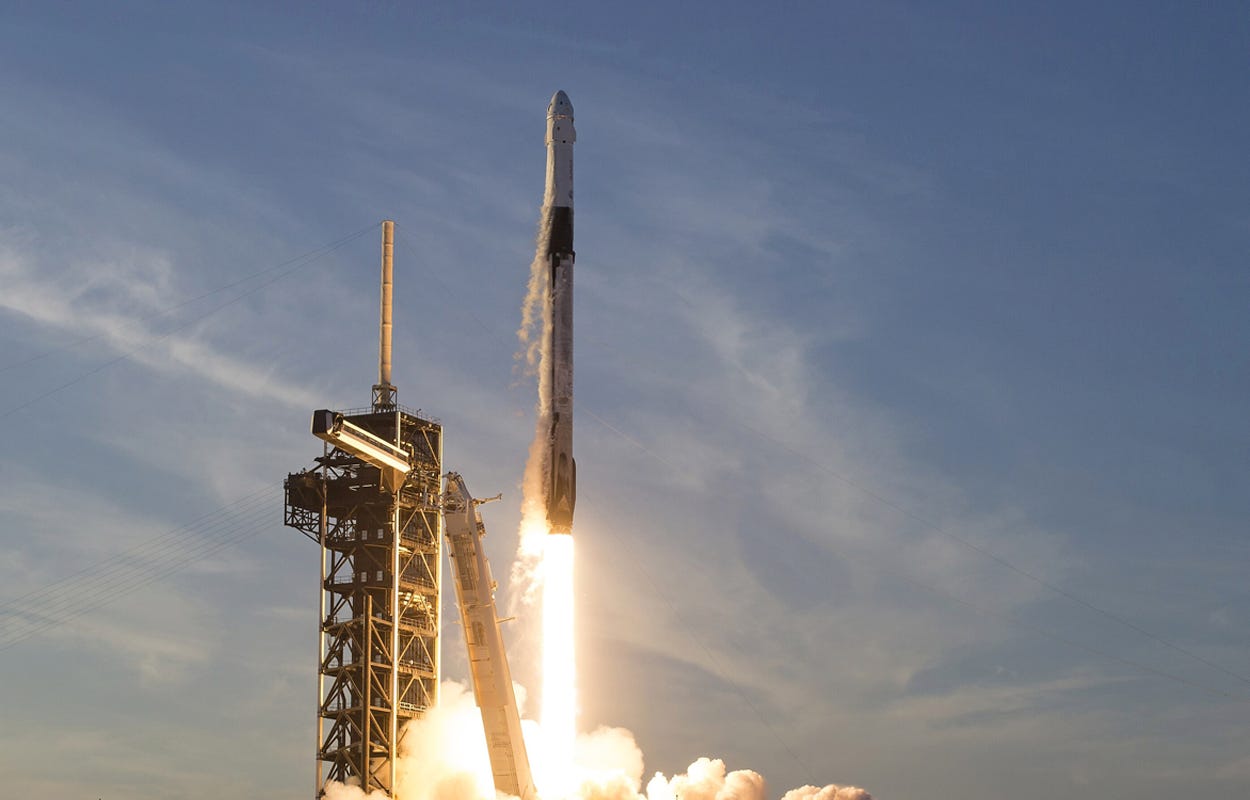
For a few days in June, Elon Musk was the richest person on the planet, and SpaceX was worth more than Amazon and Microsoft. The company had just pulled off the largest IPO in history, priced at $135 on 11 June, raising around $86 billion and valuing a rocket company at roughly $1.77 trillion. It closed its first day up 19% and kept climbing to $225.64 on 16 June, a peak that put SpaceX near $2.6 trillion and made Musk, on paper, the world’s first trillionaire.
Then it reversed. Over three sessions, the stock handed most of it back, including a 16.4% fall on 22 June that erased roughly $400 billion in hours, the second-largest single-day wipeout on record, behind only Nvidia’s near-$600 billion loss eighteen months ago, when DeepSeek spooked the market. By week’s end, it had steadied near $153, still above its listing price.
But SpaceX is no longer only a rocket company, even though it still puts more into orbit than anyone else. It is also a satellite-internet provider, rents out computing power, and is the centre of gravity for Musk’s attempt to build an empire from the technologies he thinks will define the century, while burning billions of dollars. My reading, which the rest of this piece tries to justify, is that this is a high-risk, high-reward bet that for now needs two things it does not have: more time and more money.
A company with $100 billion borrows more
So why did SpaceX’s stock fall? SpaceX sold only a small slice of itself to the public (about 4.2% of its shares), and when that few are trading, the price swings sharply in both directions. After a run-up like that, some investors were always going to cash out.
But the June 22nd drop had a specific trigger. That day, SpaceX said it would borrow at least $20 billion by selling bonds, to pay off a short-term loan it had taken in March to buy xAI. Paying off one loan with another is ordinary housekeeping. What unsettled investors was the timing: SpaceX had just told lenders it was sitting on $100.8 billion in cash—more than Microsoft—and was borrowing anyway. In the end, it raised about $25 billion. Which raises the obvious question: why does a company with that much cash need to keep raising more?
SpaceX has lost money almost every year since 2002—about $41.3 billion in total. In 2025, it brought in $18.7 billion but still lost roughly $4.9 billion, and the figure that matters most is that it spent about $14 billion more than it took in. That gap had more than doubled in a year, and the new AI business was doing most of the spending. One analyst at KeyBanc expects this year's gap to be closer to $28 billion, and SpaceX has disclosed plans to spend around $350 billion building everything out by 2030—most of it on AI. Moody's still judged its debt safe enough to invest in, but warned the rating was held back by "elevated execution and financial risks"—in plain terms, a risky plan and a lot of money going out the door.
SpaceX is raising every dollar it can, in shares and in debt, not because it is short of cash today, but because of the scale of what it plans to build next.
More than a rocket company
SpaceX is still, at heart, a rocket company. Falcon 9 and the idea of reusable rockets revolutionised the space industry and improved the economics of spaceflight. In 2025, SpaceX carried 2,213 tonnes to orbit, more than 80% of everything humanity launched that year. The runner-up, CASC, China’s state launch group, launched roughly an eighth of what SpaceX did. Falcon and Dragon are the reliable, cash-generating workhorses behind some $22 billion of government business, with no real competition.
Then there is Starlink, which generated $11.4 billion in 2025, about 61% of the company's $18.7 billion revenue, and it is the only segment that makes money. Starlink is the engine that quietly subsidises everything else, though revenue per user has slid from about $99 a month in 2023 to $66 in early 2026, even as subscribers doubled.
But since the beginning of 2026, SpaceX has started to become more than just a rocket company. In February 2026, SpaceX absorbed xAI, Musk’s AI company, in an all-stock deal. That merger also brought in X, the former Twitter, under SpaceX. AI became SpaceX’s third reporting segment, and immediately its largest cash sink.
Grok, xAI’s AI model, never seriously challenged OpenAI or Anthropic. Downloads collapsed by about 60% by April, and paid conversion is negligible, around 0.17% against 6% and more for ChatGPT. Musk himself conceded the company “was not built right.” Grok now lives mostly inside X, better known for the controversies it generates than the subscriptions it brings in.
To run Grok, xAI went on building two enormous data centres—Colossus 1 in Memphis, with more than 220,000 Nvidia GPUs, and Colossus 2, which aims to house 550,000 Nvidia GPUs. But with Grok failing to become a key player on the AI stage and unable to use all of that computing power, SpaceX decided to essentially become a neocloud. The company now rents the world’s most sought-after compute out, and it has already landed some big names—Anthropic pays around $1.25 billion a month for Colossus 1; Google has agreed to roughly $920 million a month from October; and recently, SpaceX signed a $150 million per month deal with Reflection AI. Together, that is about $26 billion a year, more than SpaceX’s entire 2025 revenue. And where Grok fell short, SpaceX simply bought a replacement. In June, it agreed to acquire Cursor, the popular AI coding tool, for $60 billion—all in stock, and the largest acquisition of a venture-backed startup on record.
Musk’s data-centre ambitions go beyond Earth, figuratively and literally, as he dreams of orbital data centres. He has called space-based AI a “no-brainer,” and set out to build factories that would put a gigawatt of orbital computing into space each year by late 2027. Like many of Musk’s ideas, orbital data centres are technically possible, but currently economically unviable. Even SpaceX’s own prospectus concedes the plans “may not achieve commercial viability.” And to make the chips for all of it—the satellites, the cars, the robots—SpaceX, Tesla and Intel are jointly building Terafab, a semiconductor plant in Texas that could cost up to $119 billion.
Underneath all of it sits Starship, the vehicle meant to launch the next-generation Starlink satellites, the orbital data centres, and NASA’s astronauts back to the Moon. It is late and keeps exploding. It managed only five flights in 2025 against a target of twenty-five, a string of ground-test failures, an FAA grounding in May, and roughly two years of slippage that NASA’s own inspector general says threatens the Artemis timeline.
None of this is cheap. Each of these bets—the data centres, Cursor, the chip plant, Starship—runs to tens or hundreds of billions of dollars, and almost none of them make money yet.
Tesla is next
You'll notice one company has been absent from all of this: Tesla. And it is not doing well. Musk’s EV company delivered 1.64 million vehicles in 2025, down 8.6%, a second straight decline that ceded the global EV crown to China’s BYD. As the car business faces problems, the company is pivoting into robotaxis and humanoid robots, both of which are still unproven and are currently in an R&D phase.
Then there is Tesla’s brand, which has turned politically toxic, and the cost is measurable. A Yale study estimated that Musk's political turn cost Tesla between 1 and 1.26 million US sales and $51–62 billion in revenue, from late 2022 to 2025: the environmentally-minded, left-leaning buyers who were Tesla's core market walked away over his role in Trump's second term, while the right was never going to buy an electric car anyway.
So Musk has a shrinking carmaker on his hands, inside a portfolio of companies he owns outright. If you have followed him for any length of time, you can probably guess what tends to happen to a Musk company in that position. We have seen it twice already. In 2016, Tesla bought SolarCity, a near-insolvent solar company founded by Musk’s cousins and chaired by Musk himself, in an all-stock deal critics called a bailout. In March 2025, xAI absorbed X at a $33 billion tag, below the $44 billion Musk had paid for it in 2022. And in February 2026, with Grok failing, xAI was folded into the healthier SpaceX, valuing the combination at about $1.25 trillion, just months away from SpaceX’s IPO. Tellingly, Musk’s announcement never mentioned Grok.
I’d like you to notice a pattern here. A weaker company folded into a stronger one, always in stock, always with Musk on both sides, always justified by “synergies.” Which raises a fair question about the xAI–SpaceX deal itself—how much was about consolidating Musk’s companies, and how much about lifting SpaceX’s valuation just before it went public? Probably both. But bundling a failing chatbot into the most admired private company in the world, weeks before selling shares and without naming it, leans one way.
No Tesla–SpaceX merger has been announced, but it should not be ruled out. The New York Times and Bloomberg’s Liam Denning both entertained that idea. If it were to happen, it would most likely follow the same pattern as the previous mergers—an all-stock deal with SpaceX as acquirer. On IPO day, SpaceX president Gwynne Shotwell said that a merger “might make Elon’s life a little easier,” before adding that for now she was focused on “keeping the lights on.”
What makes it personal for Musk is the pay package Tesla's shareholders approved in November 2025, the largest in corporate history, worth up to $1 trillion in stock, paid out in twelve tranches as Tesla hits a ladder of targets. The hardest of those are operational, such as a million robotaxis on the road or a million Optimus robots delivered, which Tesla is nowhere near doing. But as Electrek argues, a merger would change the rules. The package contains a "change of control" clause that, in a takeover, sets the operational targets aside and leaves only one test standing: the share price. And a merger is exactly the sort of news that sends a share price up. So a deal could let Musk clear the final bar precisely by announcing the deal—collecting a slice of the largest pay package in history without Tesla building a single one of the things it was meant to reward. It is not an automatic payout, but it is a way for Musk to solve several problems at once.
A nascent tech empire that needs time and money
The combined company would span rockets, electric cars, AI, and robotics, with a social-media platform bolted on for good measure. It would almost certainly be the most valuable company in the world, with Musk in control of all of it.
I think that is the game Musk is playing right now. He is trying to build an empire from the technologies he believes will define the century—space, AI, and robotics—and to finance each against the others inside a structure he controls.
But so far, that nascent tech empire faces serious challenges. Its building blocks are struggling. The AI build-out alone runs to tens of billions a year. Starship keeps exploding. Grok failed. Tesla is shrinking. And on top of that, Musk’s companies are pouring money into robotaxis, humanoid robots and orbital data centres, all of which are unproven.
It is a high-risk, high-reward game, and the IPO gave Musk room to keep playing it a while longer. If he wins, he builds the kind of mega-corporation that so far exists only in scifi/cyberpunk stories. If he loses, the damage no longer stops with him. Somewhere along the way, Musk’s bet quietly became everyone’s.
If you enjoy this post, please click the ❤️ button and share it.
🦾 More than a human
Exoskeleton and robotic arm reduce factory lifting strain by up to 65%
Researchers at the Technical University of Munich have built WearaCob, pairing a wearable exoskeleton with a robotic arm to help factory workers. The exoskeleton takes over part of the lifting and cuts muscle effort by up to 65%, with the robot weighing each object and telling it how much help to give, even for uneven loads. The robot moves safely around people and can be taught new tasks just by guiding its arm, with no coding needed. The result is closer, safer teamwork that could reduce strain and injury on the factory floor.
🧠 Artificial Intelligence
Previewing GPT‑5.6 Sol: a next-generation model
OpenAI has launched its new GPT-5.6 series: Sol, the flagship model; Terra, a balanced model for everyday work; and Luna, a fast and affordable option. However, unless you are one of a small group of approved partners, you cannot use the new models—at the Trump administration’s request, all three have been restricted, much like what happened to Anthropic’s Fable 5, which was pulled entirely after a government order. OpenAI made clear it is unhappy with the arrangement, calling it a short-term step before wider access in the coming weeks. On capability, OpenAI claims Sol is its strongest model yet, with improvements in coding, biology, and cybersecurity. To address safety concerns, it says it has built a heavily hardened safety system directly into the model, designed to favour defensive security work over hacking.
OpenAI and Broadcom unveil LLM-optimized inference chip
OpenAI has revealed Jalapeño, its first custom AI chip built with Broadcom, to run its models more cheaply and efficiently. The chip is made just for inference rather than training. Early tests suggest it uses far less power than current alternatives. Like Google and Amazon before it, OpenAI wants to rely less on Nvidia and control more of its own technology, from chips to products, so it can make AI faster, cheaper, and more reliable. Deployment is set to begin by the end of 2026 and expand over several chip generations.
Sakana Fugu
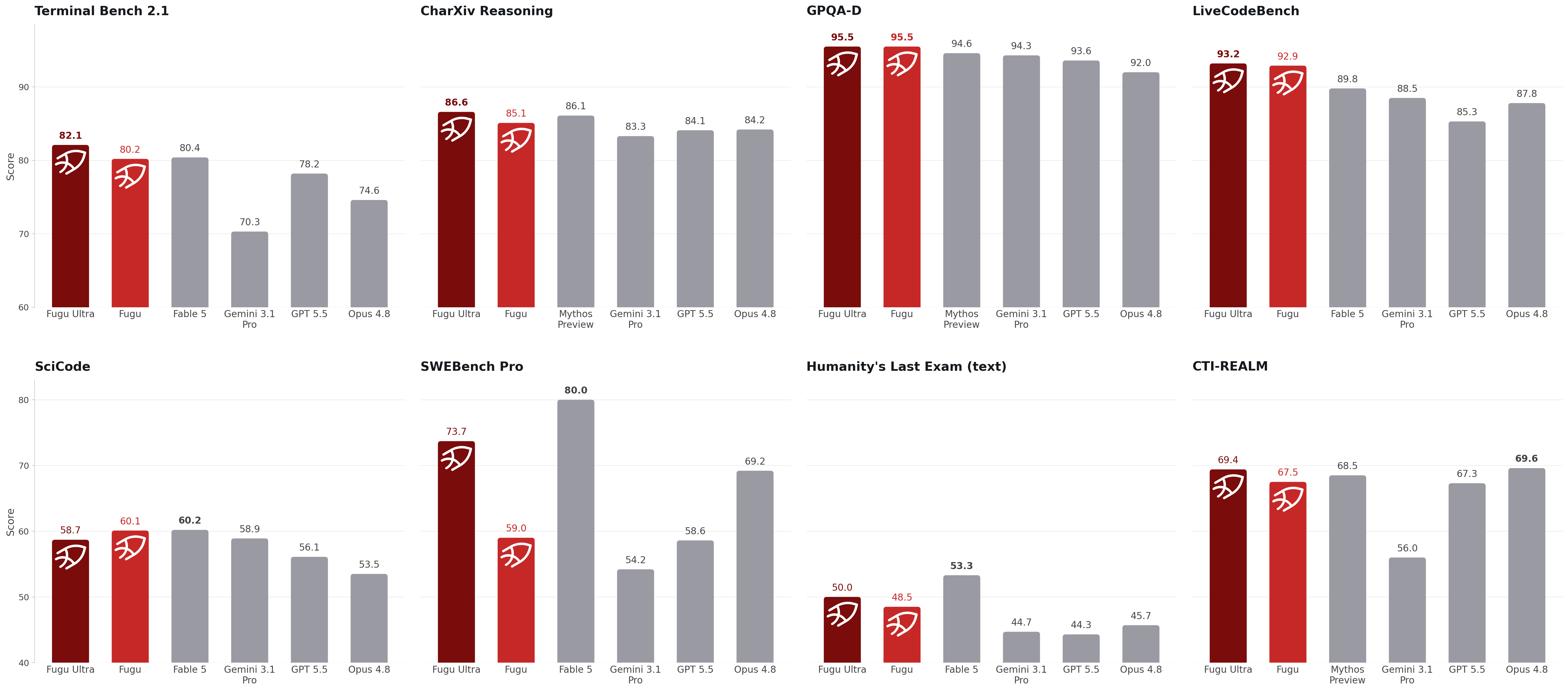
Sakana AI has launched Sakana Fugu, which isn't one big model but a system that picks and combines a pool of leading AI models behind a single API to handle hard coding and research tasks. It comes in two flavours—the base Fugu and Fugu Ultra. According to benchmark results from Sakana, both models are comparable to the world’s best models, with Fugu Ultra matching, in some cases, the performance of Antropic’s Claude Fable 5. Sakana Fugu is available on a pay-as-you-go basis or via a monthly subscription, though it's not yet available in the EU.
Introducing Claude Tag
Anthropic has launched Claude Tag, a tool that lets teams add Claude to their Slack channels and assign it tasks by tagging Claude. Unlike a private chat, one shared Claude works for the whole channel, remembers context over time, and can work on its own. The tool is in beta for Enterprise and Team customers.
OpenAI Leans Toward Waiting Until Next Year for I.P.O.
OpenAI may delay its stock market listing until 2027, according to internal sources quoted by The New York Times. Sam Altman wanted a quick listing at a $1 trillion value, but a weak debut from SpaceX and nervous markets have made advisers warn that investors might not buy in. OpenAI is still losing money and spending heavily, even as it cuts side projects and pushes its Codex coding tool to compete with Anthropic.

Anthropic Accuses Alibaba of ‘Illicitly’ Accessing AI Models
Anthropic has accused Alibaba of secretly using its Claude AI model without permission, claiming that operators tied to Alibaba’s Qwen lab used nearly 25,000 fake accounts to run 28.8 million exchanges between April and June. In a letter to US lawmakers, Anthropic said the goal was to copy Claude’s most valuable skills cheaply, and it urged the government to crack down on the practice. This is not the first such accusation from Anthropic. In February 2026, the company levelled similar claims against DeepSeek, Moonshot, and MiniMax.
MGX raises a $50bn AI fund and is already spending it
Abu Dhabi’s MGX has raised nearly $50bn for one of the biggest funds ever built solely to back artificial intelligence. Unusually, the emirate raised this money from outside investors rather than spending its own oil wealth, making MGX act more like a global asset manager than a typical Gulf state fund. It already holds stakes in OpenAI, Anthropic and xAI, and is now eyeing a Singapore data-centre operator as its first deal in Asia.
Zhipu weighs multibillion-dollar raise after 2,000% surge
Chinese AI firm Zhipu has seen its shares jump about 2,000% this year, valuing it above $128 billion and prompting plans for a huge new share sale. The rally took off after Anthropic pulled its top models worldwide under US export controls, leaving customers nervous about relying on American AI. Zhipu quickly launched GLM-5.2, a free, open model that became the first Chinese system to rank among the world’s top three. Supporters predict booming revenue and profit by 2028, but critics warn the company is losing money heavily and will need constant fundraising to survive.
U.S. Presses Meta to Agree to A.I. Reviews as Security Concerns Rise
The Trump administration wants Meta to let the government review its AI models for safety and security risks, The New York Times reports. Every other big US AI company has already agreed, leaving Meta as the last holdout. This is part of a wider push for tighter government oversight, backed by a recent order asking companies to share models before release.
Cerebras doubled its revenue. The stock fell anyway.
Cerebras almost doubled its revenue and predicted strong yearly sales, but its shares still fell about 10%. The problem was profit margins, which are being squeezed because the company can’t find enough data-centre space and power to run its chips. Its boss called it a “grand irony” that buildings, not technology, are now the main obstacle.
▶️ The data black hole at the center of AI (11:56)
In this video, Dwarkesh Patel argues that AI progress is driven mainly by data, not smarter learning. Models improve because they’re fed more and better data, with reinforcement learning acting as a way to generate high-quality synthetic examples. His key point is that today’s models are far less efficient learners than humans, needing vastly more information to gain each new skill. He rebuts common objections—evolution, hidden sensory data, and scaling—and notes this explains why open models catch up to the frontier within months.
Allbirds continues AI pivot with name change and CEO hire, sending stock soaring
Allbirds, the company you might have known as the maker of sustainable shoes, continues its hard pivot into AI infrastructure by rebranding to Smartbird. It has also brought in Nadia Carlsten, a former AWS quantum computing boss, as CEO. Investors are apparently happy with the change, as shares went up by 39%. The company had already sold its shoe business for $39 million and closed its US stores.
ByteDance unveils Seedance 2.5, a 30-second native 4K AI video model that accepts 50 reference inputs
ByteDance has launched Seedance 2.5, an AI tool that creates 30-second 4K videos and can take up to 50 reference inputs like images, audio, and 3D models—far more than rivals such as Google’s Veo. It is built for professional use, with better sound syncing and sharper results, and is set for public release in early July.
Alibaba’s AI video model rises to No. 2 in global rankings, as OpenAI’s Sora and ByteDance’s Seedance fall away
Alibaba has released HappyHorse 1.1, an AI video-making tool launching with a 40% discount and improved features like consistent characters and accurate lip sync. It reportedly outperforms Google, its main competitor, in independent tests. Backing it all is Alibaba’s huge $52.7 billion infrastructure spending, which gives the product the scale and local hosting needed to meet Europe’s strict data rules.
Notion Mail shuts down amid agent takeover
Notion is closing its email app in favour of its AI agents. The company says more than half of users already let agents handle their email without ever opening their inbox. Notion says that existing emails in the inbox will stay intact, but users must export drafts, scheduled emails, and saved snippets to keep them.
Patch the Planet: a Daybreak initiative to support open source maintainers
OpenAI has launched Patch the Planet, a security initiative built with Trail of Bits that uses its most cyber-capable AI models, such as GPT-5.5 Cyber, to find vulnerabilities in critical open-source software, paired with human engineers who verify every finding and help maintainers write patches. The aim is to ease the burden on overwhelmed maintainers, since AI is now very good at finding flaws, but fixing them remains the bottleneck. Early results include hundreds of issues found and dozens of patches merged across 19 projects like cURL, Python, and Go, plus serious bugs uncovered in Linux, OpenBSD, and major browsers. It closely mirrors Anthropic’s Project Glasswing, but where Glasswing has been criticised for finding many bugs that go unpatched, Patch the Planet targets exactly that gap by prioritising human-verified fixes.
Tesla plans to sell modular AI data center hardware called ‘Megapod’
Tesla has applied to trademark “Megapod,” a complete AI data centre unit that bundles servers, power, and cooling into a single package. This comes just after Tesla scrapped its Dojo supercomputer and saw repeated delays to its own AI chips, all of which point to a weak track record in building compute hardware.
▶️ What does a GPU cluster really cost? (13:40)
SemiAnalysis and High Yield break down the real cost of running and using a GPU cluster. The analysis covers the entirety of a GPU cluster—not just GPUs, but also networking, storage and other things that usually don’t make the headlines and how they affect the cost and effectiveness of a GPU cluster.
Google Investing in ‘Backrooms’ Studio A24
Google is investing about $75 million in the independent film studio A24 to build new tools for making and releasing movies. It is Google’s first stake in a film studio, and the deal is unusual because Hollywood and AI firms have mostly clashed over copyright and creativity. The companies say their tools will help filmmakers keep creative control rather than just cut costs, and A24 is already working on AI-generated storyboards. The move is risky for A24, whose young, AI-sceptical fans may dislike the partnership.
Mistral: Introducing OCR 4
Mistral has released OCR 4, a small AI model for reading documents. Unlike older tools that just turn a page into plain text, OCR 4 also marks where each element sits, labels what it is (such as a title, table or signature), and rates how confident it is in each part. Mistral says OCR 4 beats other such models, and it can be run on a company’s own servers to keep sensitive data private.
LFM2.5-230M: Built to Run Anywhere
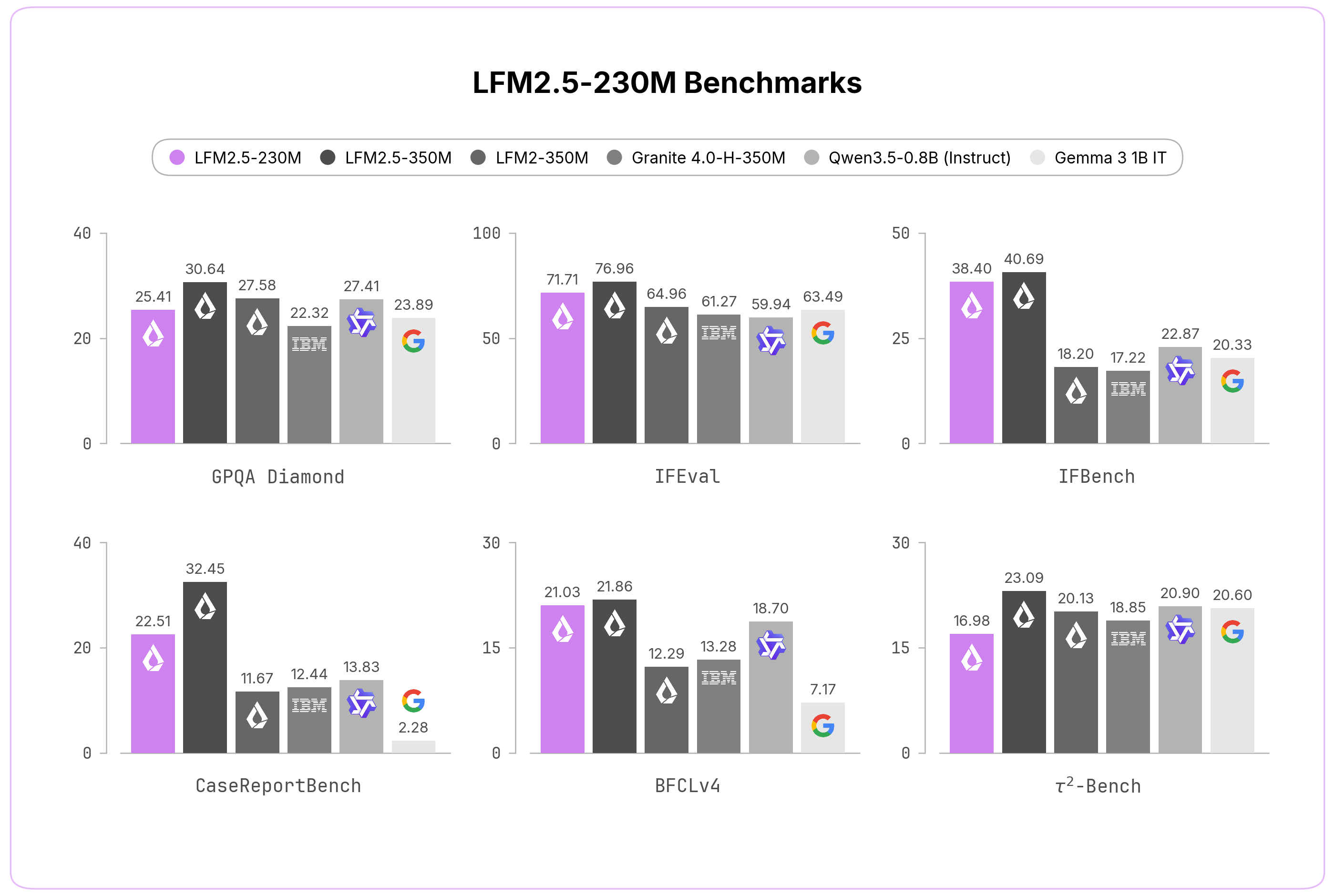
Liquid AI presents LFM2.5-230M, its latest fast, lightweight foundation for developers to fine-tune and deploy in agentic workflows. Unlike other models, LFM2.5-230M is not built using transformer architecture. Instead, it is using liquid neural networks (Ramin Hasani, the company’s CEO and co-founder, explains how they work in depth in this lecture). Despite its small size (only 230 million parameters), LFM2.5-230M beats or matches larger models in its category, including Google’s Gemma 3 1B. LFM2.5-230M is available on Hugging Face.
🤖 Robotics
Humanoid maker Agility Robotics to go public through SPAC merger
Agility, the company behind the Digit humanoid robot, is going public through a SPAC merger in a deal valuing it at $2.5 billion and raising more than $620 million to scale production. The company positions itself as the only US publicly listed pure-play humanoid company with active commercial deployments, with Digit already working at customers such as Schaeffler, Toyota Canada and Mercado Libre, and has already attracted over $300 million in multi-year orders.
A Fatal Tesla Crash in Texas Sets Up a Legal Showdown
A 76-year-old Texas woman was killed when a Tesla Model 3 crashed into her home at over 70 mph (over 112 km/h). Now her family is suing both the driver and Tesla, claiming its Full Self-Driving feature was dangerously designed. Tesla denies this, saying the driver had pressed the accelerator fully, overriding the system. The case is similar to a 2024 Florida one, where a jury found Tesla partly to blame for a fatal crash and ordered it to pay over $240 million.
▶️ Unitree R1 | Price from $4,900, Ready Stock (0:30)
Unitree began deliveries of R1, its latest and most advanced humanoid robot. And to celebrate that, Unitree reminded everyone what kind of acrobatics the robot is capable of.
Mobileye is entering the US robotaxi market with standalone service
Mobileye plans to launch its own robotaxi service in an unnamed US city in 2027. It will start with about 100 cars early next year and hopes to grow to around 17,000 within five years. This is a big shift, as Mobileye usually supplies its technology to other companies rather than running its own service. The company says it will still keep working with partners like Volkswagen, Lyft and Porsche while building this new business.
Nvidia Seeks to Make Humanoid AI Robots Safer Around Humans
Nvidia sees humanoid robots as the next big market for AI, worth $200 billion by 2035, and wants to speed up their arrival. To do so, it has built Halos, a system adapted from self-driving car technology and running on its IGX Thor hardware, which helps robots understand their surroundings so they can work safely next to people, even touching them when needed, instead of freezing whenever a person comes close. Nvidia has also opened a lab to help robot makers pass safety tests before seeking approval.
Project Fetch: Phase two
Anthropic revisits Project Fetch, in which the company tested how much Claude can help people program a robot dog. This time it checked whether the newer model, Claude Opus 4.7, could do the jobs alone rather than just helping people. Working on its own, the model was roughly 18 to 38 times faster than the earlier human teams at tasks like connecting to the robot’s sensors and spotting a beach ball, though it still couldn’t reliably nudge the ball home. Anthropic sees this as a sign we may be entering an early stage of “physical AI,” where models can pick up and use everyday hardware much as they learned to use software.
JD.com says robots will replace its 700,000 couriers
JD.com’s chair, Richard Liu, says robots will eventually replace the company’s 700,000 delivery couriers. To cushion the loss, JD has started a programme to retrain couriers for new jobs like robot maintenance, and Liu has promised not to fire any front-line workers. But the promise is hard to keep: the new roles will be far fewer than today’s courier jobs, and it’s unclear if retraining can keep pace.
Sony discontinues Japan sales of robot puppy ‘aibo’
Sony is stopping sales of its robot dog Aibo in Japan once the current stock runs out, ending an eight-year run for the interactive pet that can learn its own personality and do tricks. The $3,000-plus robodog, first launched in 1999 and revived in 2018, will still be sold in the US, and Sony says it will keep supporting existing owners. The company insists the Aibo business will continue, but won’t confirm a new model. Fans in Japan reacted with sadness to the news.
HaloBraid raises $7M to build the first robotic braiding assistant for hair salons
Meet HaloBraid, a robotics startup working to bring an automated braiding assistant to hair salons this year. The device doesn’t replace stylists—a braider starts each braid by hand, then the machine finishes it about five times faster, easing the strain that leaves many braiders with carpal tunnel and arthritis. The startup has recently raised $7 million, led by Reddit co-founder Alexis Ohanian’s venture firm.
▶️ Warehouse Robots Don’t Need Legs (44:55)
In this conversation, Locus Robotics CEO Rick Faulk shares the lessons he and the company have learned about warehouse automation. He argues that a robot built to do one job really well beats the popular humanoid robots, which he sees as too expensive and not yet practical for warehouses. He stresses that the company's success comes from starting with the customer's real problem rather than building clever technology in search of a use. Faulk predicts that within a decade, almost every warehouse will need to automate to stay competitive.
What Amazon’s Astro Taught Me About Giving Robots a Soul
In this article, Mike Forst shares his experience designing the sound and character for Amazon’s Astro home robot. His main point is that any robot moving through your home will be seen as a character, whether designers plan for it or not, so it pays to shape that character on purpose. Forst urges product makers to define a robot’s character before its features, and to design it to adapt and grow with the people it lives with. It is an insightful story on robot design and how to make a robot feel “alive".
Tiny robots deliver stem cells to repair spinal cords
ETH Zurich researchers have built tiny robots that may help repair spinal cord injuries, which rarely heal on their own. Each robot pairs stem cells with magnetic particles, so doctors can steer the cells to the exact injury and use magnets to stimulate them into new nerve cells. In tests, injured zebrafish swam normally within three days, and mice with fully severed cords regained much of their movement after 28 days, with no harmful side effects. The robots then dissolve away once their work is done. Human trials, however, are still years off.
🧬 Biotechnology
Colossal and the US Government Are Creating an Endangered Species ‘BioVault’
The US government has teamed up with Colossal Biosciences to store frozen cells, tissue, and DNA from over 2,300 endangered species. The government will own the samples, while Colossal pays the costs and handles the genetic sequencing. The deal comes as the Trump administration is rolling back endangered species protections, including allowing more offshore drilling.
NVIDIA Announces BioNeMo Agent Toolkit — Tools for Agents to Accelerate Scientific Discovery
Nvidia has released BioNeMo Agent Toolkit, which turns AI assistants into specialist science helpers for drug discovery and biology research. It gives these AI agents the tools to do real scientific work, such as designing proteins, screening drug candidates and analysing genetic data to help make research faster and cheaper. Nvidia says this could speed up discoveries across biology, chemistry and medicine by letting AI and scientists work together in a continuous loop. BioNeMo Agent Toolkit is open source and available on GitHub.
💡Tangents
Apple raises prices of MacBooks, iPads as memory costs skyrocket
Apple has raised prices on its iPads, MacBooks, HomePods and Apple TV because soaring memory and storage costs, driven by the AI data centre boom rather than a shortage, have made these chips far more expensive. The iPhone is safe for now, but analysts expect its prices to climb too. If you want to know exactly how the prices have changed, 9to5Mac has a great breakdown of them. ZONEofTECH also analyses the new prices, and both come to the same conclusion—the price hikes are massive, especially for higher-end MacBook Pros and Mac Studios.
Thanks for reading. If you enjoyed this post, please click the ❤️ button and share it!
A big thank you to my paid subscribers, to my Patrons: whmr, Florian, dux, Eric, Preppikoma and Andrew, and to everyone who supports my work on Ko-Fi. Thank you for the support!